We use cookies, including third-party cookies from Google to serve personalized ads through AdSense, to operate this site and understand how it is used. By continuing to browse, you accept this use. See our Privacy Policy and Terms of Use for details, including how to opt out of personalized advertising.
Accept
SmartData CollectiveSmartData Collective
  • Analytics
    AnalyticsShow More
    chatgpt image jul 21, 2026, 04 34 30 pm
    4 Core Benefits of Predictive Maintenance after Vibration Analysis
    10 Min Read
    How Does Data Mining Boost Customer Satisfaction in Logistics? Harnessing Analytics for Results -- AI-generated illustration
    How Does Data Mining Boost Customer Satisfaction in Logistics? Harnessing Analytics for Results
    11 Min Read
    chatgpt image jul 13, 2026, 04 23 45 pm
    How Data Analytics Helps Companies Improve User Engagement
    19 Min Read
    chatgpt image jul 13, 2026, 03 59 46 pm
    How Data Analytics Improves Multi-Location Search Strategies
    10 Min Read
    cybersecurity efforts
    How Behavioral Analytics and AI Are Redefining Cybersecurity for Boca Raton Businesses
    14 Min Read
  • Big Data
  • BI
  • Exclusive
  • IT
  • Marketing
  • Software
Search
© 2008-25 SmartData Collective. All Rights Reserved.
Reading: How the Cloud Changes Business
Share
Notification
Font ResizerAa
SmartData CollectiveSmartData Collective
Font ResizerAa
Search
  • About
  • Help
  • Privacy
Follow US
© 2008-23 SmartData Collective. All Rights Reserved.
SmartData Collective > IT > Cloud Computing > How the Cloud Changes Business
Cloud Computing

How the Cloud Changes Business

jessoaks11
jessoaks11
4 Min Read
How the Cloud Changes Business
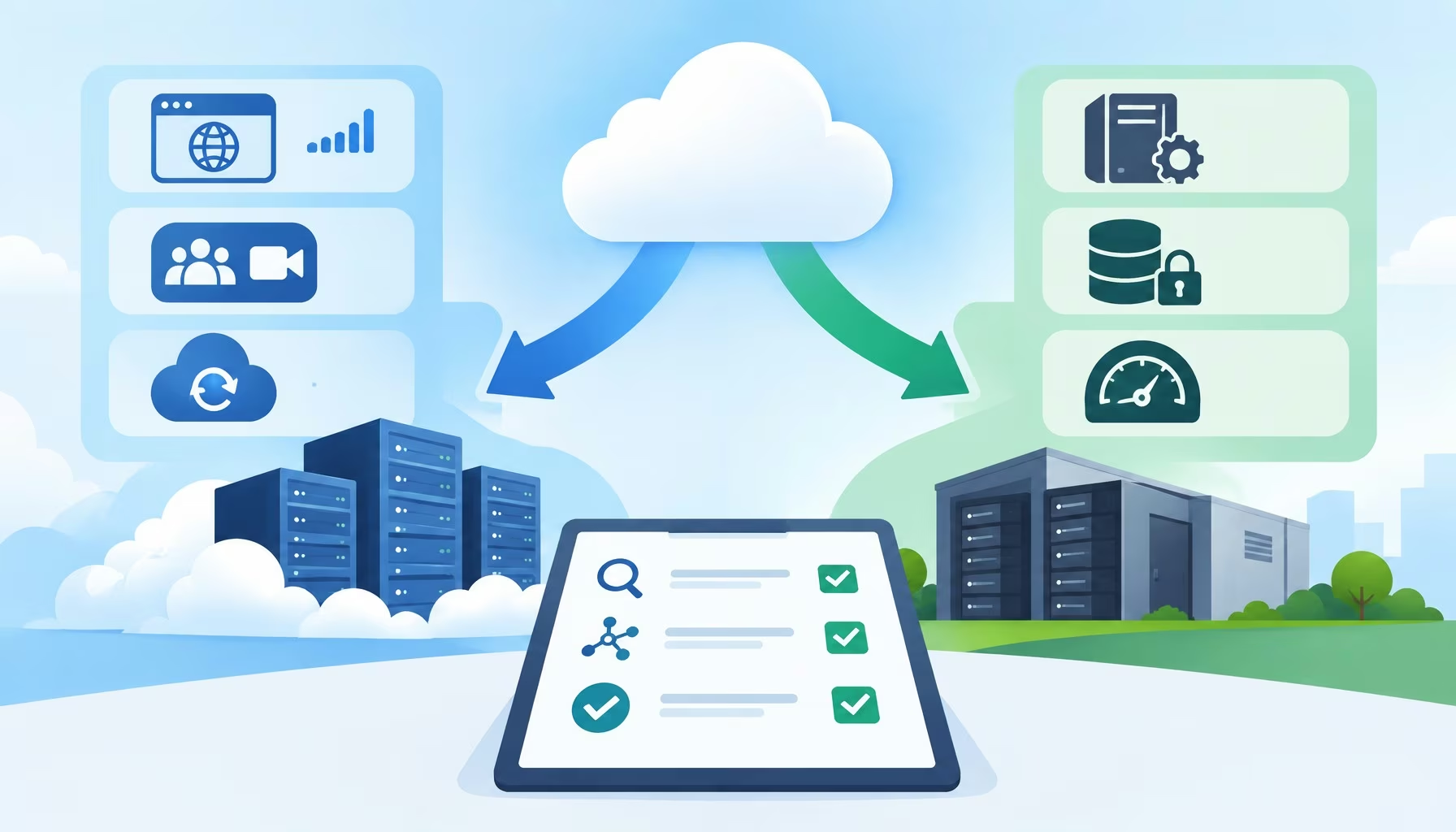
Illustration generated with Qwen Image.
SHARE

Business is no longer carried on as usual – cloud computing has completely changed the game and how companies run themselves.

Business is no longer carried on as usual – cloud computing has completely changed the game and how companies run themselves. Due to the introduction of the cloud and syncing technology advancements, how employees access company information, applications, share documents and work has gone through a face-lift in more ways than one, improving overall business processes and efficiencies.

Mobile, Agile… and Definitely Not Hostile 

Because cloud services are internet-based, businesses no longer have to worry about physical restrictions previously posed. Software used to have to be manually installed on each individual computer and files could only be accessed via in-house server, but now, work applications rest in the ever-omnipresent cloud. This increased mobility allows work to be done anytime, anywhere, even in the air.

More Read

Big Data Maturity
CIOs Still Face Challenges to Reaching Big Data Maturity
Is Data Less Secure in a Cloud Environment? [VIDEO]
How Big Data Will Change Marketing Forever
Business Intelligence’s Benefits Suit All Types of Companies
Does Big Data Cause Deconsolidation Of The Cloud Market?

Snaps for Collaboration

Cloud technology along with synced devices has opened the floodgates for ultimate collaboration. Documents can now be worked on together with other colleagues at the same time, no matter how far apart they are. Additionally, task lists and calendars are shared and updated in real-time to keep everyone on track and more productive. These newfound capabilities presented by the cloud remove unnecessary back and forth emails and help implement version control.

Sharing is Caring

We’re in an era where everything is data-driven and sharing information quickly is crucial to a company’s livelihood. Tech industry pioneers like Samsung have spearheaded a synced device movement that goes hand-in-hand with cloud computing platforms so that the most up-to-date info is accessible to relevant parties. Data collection and analytics provide extremely valuable insights on consumer behavior – the cloud, plus supplementing synced devices, lets businesses share this knowledge with the entire company to analyze and capitalize on right away. 

Cash is King

When in the business to make money, any place to cut overhead costs is key. Cloud implementation has helped lower expenses in multiple ways by eliminating server maintenance fees, power and cooling costs, software licensing, and upgrades. Cloud computing services, with their pay-as-you-go setup, also provide the flexibility to mold to the business cycle. For example, if there’s a slower quarter, it’s simple to decrease the amount of storage space needed on a monthly basis, therefore saving where it counts.

Backup Plan

It’s hard to predict an unexpected disaster and even harder to halt business when disaster strikes. Companies that still use traditional backup hard drives or rely on the office server stand a risk of losing everything should a catastrophic event such as a fire or flood occur. With clouds, this threat can be completely removed because data is frequently/automatically backed up to a safe online location, allowing work momentum to continue.

Corporate Responsibility

Money can’t make the world go round if there’s no planet for it to run on. When using cloud computing, businesses are indirectly/directly exercising corporate responsibility to decrease their carbon footprint. Removing on-site servers and replacing with clouds can reduce energy consumption and carbon emissions up to 90%.

The cloud has completely transformed the overall scheme of the business environment in various facets. It has allowed companies to focus on actual work without dealing with the technological glitches and extra costs posed by servers. And now that employees can acquire the collateral they need to meet goals in a more efficient manner, its more than just business as usual – there’s an increase in ROI.

Share This Article
Facebook Pinterest LinkedIn
Share

Follow us on Facebook

Latest News

Flat editorial illustration: The article's core relationship is the alignment between customer behavioral data (visit frequency,
Data-Driven Loyalty: How Restaurants Use Behavioral Analytics to Optimize Revenue
Exclusive
Flat editorial illustration: The article's core relationship is that reliable eCommerce attribution depends on a unified, well-st
How eCommerce Data Teams Can Build Attribution That Holds Up
Big Data Exclusive
Flat editorial illustration: The article's core relationship is the contrast between fragmented inherited data infrastructure (wh
Data Stack Consolidation as a Data Quality and Governance Strategy for Mid-Market Teams
Big Data Exclusive
Emergency responder and nurse reviewing tablet with data dashboards
Evaluating Workforce Assessment Tools: Looking Beneath the Dashboard at Psychometric Data
Exclusive Software

Stay Connected

1.2KFollowersLike
33.7KFollowersFollow
222FollowersPin

You Might also Like

Cloud VPN Technology Makes Accessing Sports Content Easier
Cloud Computing

Cloud VPN Technology Makes Accessing Sports Content Easier

10 Min Read
SOA, Cloud: It's the Architecture That Matters
Cloud Computing

SOA, Cloud: It’s the Architecture That Matters

4 Min Read
The ‘Big Data’ Buzz – Revolution or Evolution?
AnalyticsBest PracticesBusiness IntelligenceCloud ComputingData MiningExclusive

The ‘Big Data’ Buzz – Revolution or Evolution?

6 Min Read
A Cloud-Based UI/UX Design Tool For Better Collaboration
Cloud Computing

A Cloud-Based UI/UX Design Tool For Better Collaboration

10 Min Read

SmartData Collective is one of the largest & trusted community covering technical content about Big Data, BI, Cloud, Analytics, Artificial Intelligence, IoT & more.

ai chatbot
How AI Website Chatbots Improve Customer Support and Lead Generation
Chatbots Exclusive
Artificial Intelligence for eCommerce: A Closer Look
Artificial Intelligence

Quick Link

  • About
  • Contact
  • Privacy
Follow US
© 2008-26 SmartData Collective. All Rights Reserved.
Welcome Back!

Sign in to your account

Username or Email Address
Password

Lost your password?