A buyer comparing business software can ask an AI assistant to explain alternatives and recommend a provider before visiting any company website. That answer can shape the shortlist without reproducing the order of conventional search results.
For brands, the challenge extends beyond attracting clicks. They also need to appear accurately in the comparisons buyers consult. These four agencies address that challenge through different specialties. The comparison considers diagnosis, information structure, external corroboration and coverage across AI platforms. The descriptions below reflect each agency’s published services, not comparative performance testing. The order is editorial, and none guarantees placement in AI-generated answers.
How Do
AI Systems Decide Which Brands to Recommend?
AI systems are more likely to recommend brands they can identify clearly, match confidently to the user’s need, and support with credible information from multiple sources. They may draw on a company’s own website, retrieved web content, structured information, third-party publications, databases, and other available signals when generating an answer.
That means recommendation visibility depends on more than conventional search rankings. A company can rank prominently for a category term and still be absent from an AI-generated comparison if its positioning is unclear, its public descriptions conflict, or there is limited supporting evidence connecting it to that category.
AI visibility describes how consistently and accurately a brand appears in AI-generated answers, citations, and recommendations. Answer engine optimization (AEO) focuses on improving the information and signals that help AI systems retrieve, interpret, verify, and represent that brand accurately.
Third-party evidence also matters. References from established industry publications, original research, authoritative databases, and other credible sources can reinforce how a company is understood beyond its own marketing materials. Their value depends on relevance, editorial quality, and how clearly they support the brand’s category, expertise, or claims.
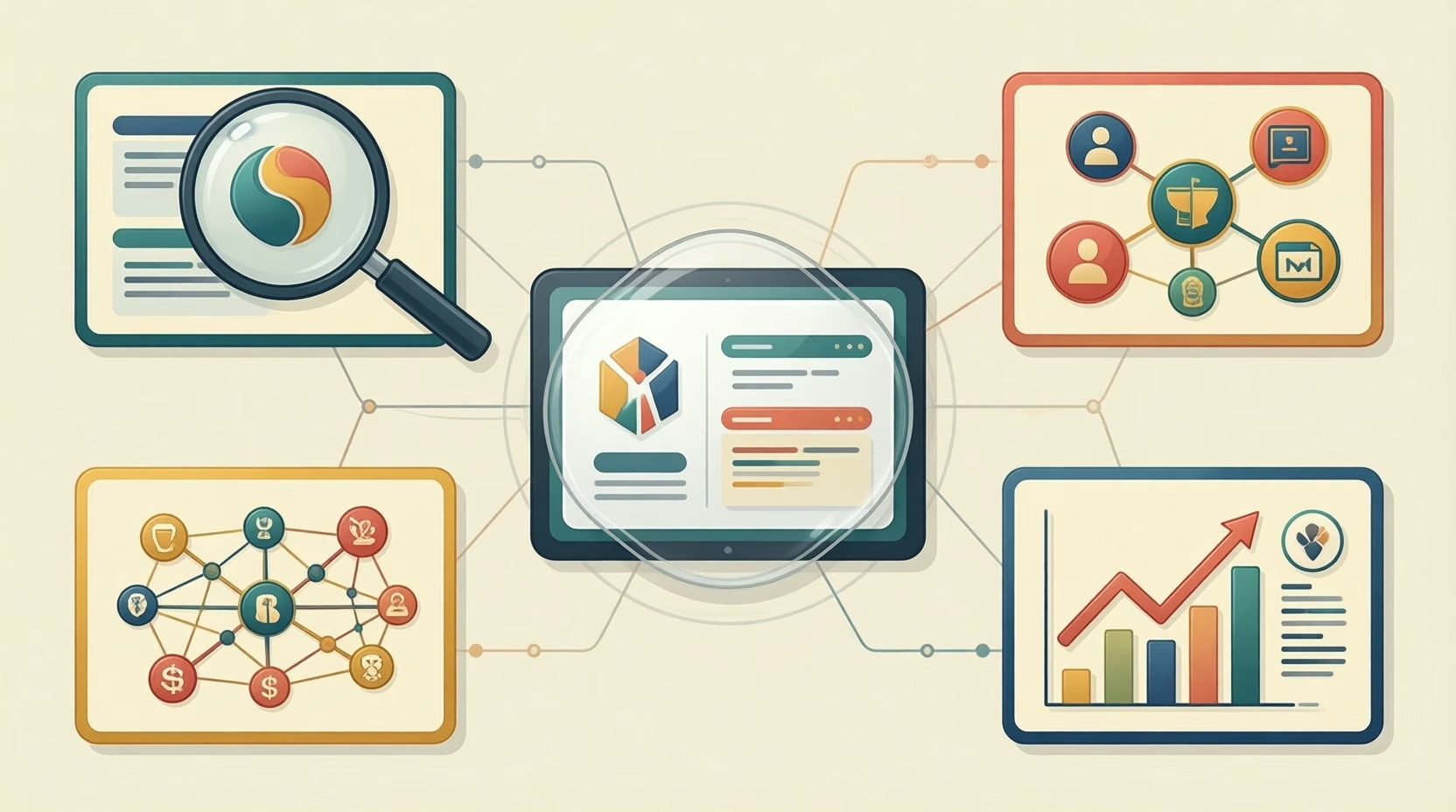
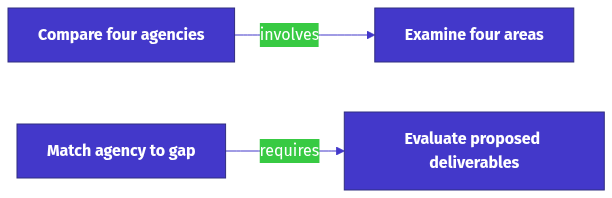
When comparing AI visibility agencies, focus on these four areas:
- Diagnosis: How does the agency measure how AI systems currently describe, classify, and surface the brand?
- Signals and structure: How does it improve brand identity, language, structured information, and extractability?
- External authority: How does it strengthen credible third-party signals beyond owned content?
- Model coverage: Does it evaluate visibility across ChatGPT, Perplexity, Google AI Overviews, and other relevant AI environments?
1.
SearchTides
SearchTides helps brands win visibility in answer engines and organic search by aligning positioning, clarity, and structure for the AI-driven buying era. Its approach focuses on how AI systems classify, interpret, and recommend a brand, making it particularly relevant when a company is being misrepresented, overlooked, or weakly differentiated in AI-generated answers.
More Read
SearchTides begins with diagnosis. Its 300+ prompt diagnostic library measures where a brand is omitted, misclassified, or described inconsistently before content or distribution is scaled. It replaces guesswork with measurable AI visibility scoring across five structural layers: Identity, Language, Distribution, Data, and Integrity. The framework is model-agnostic across ChatGPT, Perplexity, and Google AI Overviews, helping teams assess whether the same brand story holds across different AI environments.
SearchTides engineers semantic distancing so brands stand apart from competitors in model responses. Its superfeeder strategy strengthens presence across high-ingestion platforms such as Wikipedia, Reddit, and major media, reinforcing the trust signals and source signals that support AI-driven search.
Key services:
- AI visibility audits across 300+ prompts
- Answer engine optimization strategy
- Semantic positioning and brand clarity
- Citation and source-signal infrastructure.
Best for: Brands that need to correct how AI systems understand and recommend them before scaling content or distribution.
A proposal should specify the questions tested, the AI environments covered, and how omissions or inaccurate descriptions become prioritized work.
2.
iPullRank
iPullRank brings technical search, content engineering and content intelligence to complex websites. Its Relevance Engineering approach connects information retrieval, content strategy and technical execution across conventional search and AI search environments.
That depth is useful when valuable information exists but site architecture, markup or content organization makes it difficult to retrieve. Large content libraries require decisions about what to consolidate, how pages relate and which material answers specific queries.
Teams with internal engineering and editorial capacity should clarify how iPullRank will work alongside them to implement changes across complex websites. The strongest fit is where visibility depends on improving retrieval, semantic relevance, structured data, and the technical organization of complex content.
Key services:
- Technical organic search strategy
- Content engineering and intelligence
- Semantic search and relevance engineering
- Structured data and information architecture.
Best for: Teams needing deep technical search expertise and advanced organic search execution.
Ask whether the engagement includes an inventory, consolidation decisions, structural changes, new content, or some combination.
3.
First Page Sage
First Page Sage focuses on thought leadership and content-led organic growth for B2B companies. Its approach centers on building subject-matter authority through substantial educational content that explains complex topics clearly and strengthens a company’s association with relevant categories over time.
That editorial depth can support AI visibility by creating a stronger body of public information for search and answer engines to interpret. First Page Sage also extends its work beyond owned content through external lists, databases, and reputation signals, adding third-party support to the company’s wider authority footprint.
The model is especially relevant for organizations that want to strengthen how their expertise is represented publicly through sustained publishing rather than isolated content campaigns.
Key services:
- Thought leadership strategy
- Long-form editorial content
- B2B and SaaS SEO
- Category authority development.
Best for: B2B companies seeking stronger editorial authority and content-led visibility.
Clarify who supplies subject-matter expertise, who verifies accuracy, and how answer-engine gaps shape the publishing plan.
4.
Omniscient Digital
Omniscient Digital focuses on organic growth strategy and content operations for SaaS companies. Its approach is built around creating repeatable systems for planning, producing, updating, and measuring content rather than relying on isolated publishing efforts.
That makes it particularly relevant when a company already has a clear category position but lacks the infrastructure to communicate it consistently at scale. Category-focused content programs can reinforce the same themes, use cases, and areas of expertise over time, helping build a stronger and more coherent public footprint across search and AI-driven discovery.
The agency’s strength lies in turning strategic content priorities into an ongoing operating system for organic growth.
Key services:
- B2B SaaS content strategy
- Organic growth strategy
- Editorial content production
- Content program management.
Best for: SaaS brands that need structured content programs, consistent publishing infrastructure, and stronger category authority.
Ask how the proposed roadmap allocates effort among new content, updates, technical work, and authority building.
How
Should You Choose an AI Visibility Agency?
Start with the source of the visibility problem. Some brands need to understand why AI systems are misclassifying or overlooking them, while others need stronger technical structure, more authoritative content, or a repeatable publishing system.
If the priority is diagnosing how AI systems currently describe the company and correcting the underlying positioning, language, and structural signals, SearchTides offers diagnostic-first audits through its five-layer AI Undercurrent™ framework.
If the main challenge is retrieval, semantic relevance, or complex site architecture, iPullRank brings deeper technical search and content-engineering expertise.
First Page Sage is better suited to companies that need to strengthen subject-matter authority through sustained thought leadership and educational content.
Omniscient Digital fits SaaS teams that need a repeatable content and organic-growth system with consistent strategy, production, and maintenance.
Regardless of the agency chosen, clear positioning, consistent information, and credible supporting signals provide a stronger foundation for long-term AI visibility.
Visibility
Now Depends on Being Selected
Search rankings remain useful, while AI-generated comparisons create another setting where a company’s positioning is tested. The description a buyer encounters can influence whether that company enters consideration before a website visit.
Consistent descriptions and credible independent references leave a clearer public record for future searches to retrieve. As platforms and models change, maintaining that record becomes ongoing positioning work, with relevance judged against the buyer’s question.
Frequently Asked Questions
Can Strong SEO Performance Still Result in Weak AI Recommendation Visibility?
Yes. A brand can rank well in traditional search but still be absent from AI-generated comparisons or recommendations. Search rankings measure page visibility, while AI recommendation visibility also depends on how clearly the brand is classified, differentiated, and supported by consistent information and credible sources across the wider web.
How Do I Know Whether My Brand Is Being Misclassified by AI?
Test the brand across relevant buyer prompts in multiple AI platforms and compare how it is categorized, described, and positioned against competitors. Repeated inaccuracies, conflicting descriptions, or placement in the wrong category can indicate misclassification.
Why Is My Brand Missing From AI Recommendations?
A brand may be missing because its category positioning is unclear, public descriptions are inconsistent, supporting third-party signals are weak, or relevant information is difficult for AI systems to retrieve and interpret. The first step is identifying which of those gaps is affecting visibility.