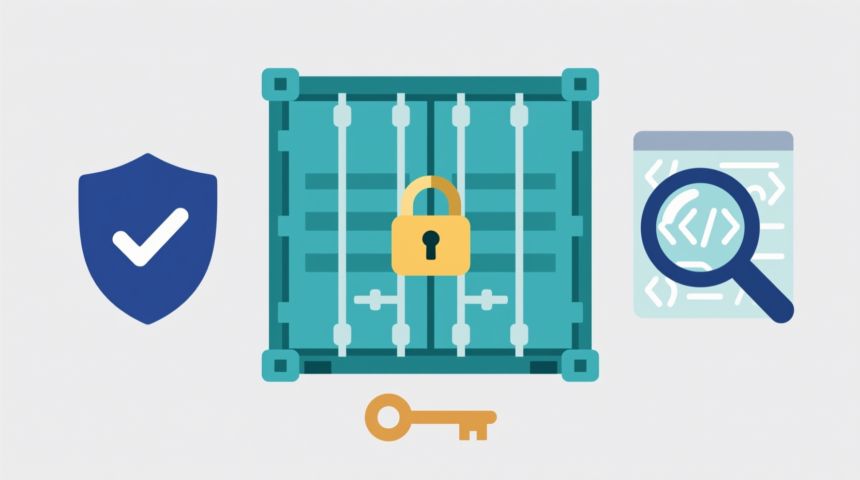
Containers are a popular solution for running software in a new environment, like a testing environment. They “contain” the entire runtime environment, including an application, all its dependencies, its configuration files, and its libraries. Containers are superior to virtualization in many ways, since they involve fewer components and can be run with far fewer resources.
However, if you want to use a container effectively, you need to have a solid container security strategy in place.
Container Security in Three Areas
It’s useful to think of your container security as addressing three major areas:
- Software-level security. Your container is going to deploy specific software, which is going to communicate with other software, and in some cases may be accessible by your employees and customers. You may even need to consider core infrastructure or middleware here. In any case, you’ll need to engage in protective measures at this level, conducting a software composition analysis (SCA) to scan for open source components, and working proactively to prevent potential security threats before they leave you vulnerable.
- Orchestration-level security. Next, you’ll need to think about your orchestration system. Orchestration refers to the components of your system that enable your software management and scaling. These are things like Kubernetes, an open source container orchestration system designed to help organizations automate application deployment. This can save you time and money, but you’ll need to keep other security considerations in mind.
- Pipeline-level security. Your system may also include components designed to automate the deployment of both your core workload software and your orchestration. For example, you may have a custom Python script designed to keep your container running efficiently. Again, you’ll need to scan all components here for vulnerabilities, and take extra measures, like refining your authentication processes.
Best Practices for Container Security
These best practices can make any container security strategy more effective:

- Be proactive, not reactive. First, you need to be as proactive as possible, rather than reactive. If you start thinking about container security only after you’ve been the victim of an attack, it will already be too late. Your goal is to prevent these attacks from occurring altogether, which means you’ll need to spot and correct vulnerabilities early.
- Rely on the help of dedicated professionals. It’s possible to learn the tenets of container security on your own, but it’s often more effective to get the help of professionals who specialize in this area. This sometimes means working with a consultant; other times, it means using software or tools that were specifically designed to improve container security execution.
- Keep open source vulnerabilities in mind. Open source components are free to use and have a full community of supporters, but they also come with some risks. If any of your components are open source, you need to know about it, and proactively scan to check for vulnerabilities long before deployment.
- Restrict permissions. Fewer permissions and fewer privileges mean you’ll be dealing with fewer possible attack vectors. Try to restrict permissions and privileges to keep your container more secure.
- Transform security into a shared responsibility. Security was once assigned to a specific department of specialists; it was their responsibility to design and execute new policies to keep an organization safe. But today, this is no longer enough. There are too many potential vulnerabilities and attack vectors to consider. It’s much more effective to make security a shared responsibility; every member of your team should be educated, trained, and forward-thinking on security matters. This way, you’ll be less likely to miss potential security issues, and you’ll have much more comprehensive security coverage.
- Enforce constant monitoring and threat detection. Some threats may emerge, despite your proactive security precautions. If you notice aberrant activity, you may have a chance to cut off the attack before it does further damage. But to do that, you’ll need an effective monitoring system in place—one that’s capable of detecting threats as they emerge.
- Learn and improve. Finally, understand that container security is a field that’s accelerating rapidly. If you want to stay effectively protected, you’ll need to commit yourself to ongoing learning and growth; keep experimenting with new approaches, and learning new best practices.
Container security is a broad field, and one that can be hard to understand if you’re new to it, but as containers become more widely adopted, it becomes increasingly important to refine your strategy. Use these best practices and commit to ongoing learning if you want to be successful.