

We use cookies, including third-party cookies from Google to serve personalized ads through AdSense, to operate this site and understand how it is used. By continuing to browse, you accept this use. See our Privacy Policy and Terms of Use for details, including how to opt out of personalized advertising.
Accept
SmartData CollectiveSmartData Collective
  • Analytics
    AnalyticsShow More: Analytics
    Cut-paper editorial diagram of public web pages flowing through a terracotta volume meter into a BI budget panel.
    The Line Item Behind Public Web Data in BI: Proxy Bandwidth
    12 Min Read
    Flat editorial illustration: The article is about joining public web signals with internal business metrics so BI teams can inter
    Alternative Data in BI: Bringing Public Web Data Into Your Dashboards
    23 Min Read
    Flat editorial illustration: The article is about automating the collection, preparation, and delivery of marketing data across p
    From Data to Dashboards: 5 Marketing Reporting Automation Software Picks
    12 Min Read
    Flat editorial illustration: The article contrasts passive follower totals with a behavioral path from attention and trust to cli
    Creator Analytics Beyond Follower Count: Seven Metrics That Measure Audience Behavior
    11 Min Read
    Flat editorial illustration: The article connects AI and marketing analytics with managerial judgment grounded in consumer behavi
    How an Online MBA in Marketing Connects AI and Data Analytics
    11 Min Read
  • Big Data
  • BI
  • Exclusive
  • IT
  • Marketing
  • Software
Search
© 2008-25 SmartData Collective. All Rights Reserved.
Reading: Can Big Data Analytics Fight Poaching?
Share
Notification
Font ResizerAa
SmartData CollectiveSmartData Collective
Font ResizerAa
Search
  • About
  • Help
  • Privacy
Follow US
© 2008-23 SmartData Collective. All Rights Reserved.
SmartData Collective > Analytics > Predictive Analytics > Can Big Data Analytics Fight Poaching?
Predictive Analytics

Can Big Data Analytics Fight Poaching?

jonathanbuckley
jonathanbuckley
6 Min Read
Can Big Data Analytics Fight Poaching?
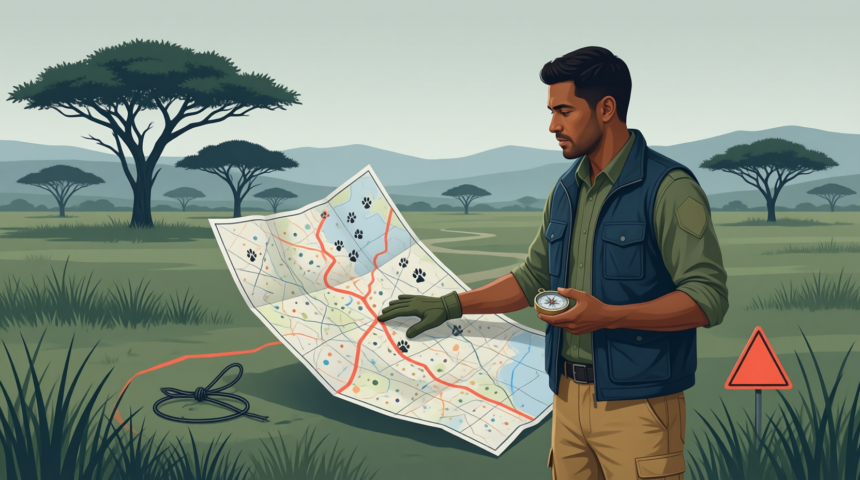
Illustration generated with Qwen Image.
SHARE

ImageThe black rhinoceros is one of the most endangered animals on the planet. In 1970, around 65,000 of them roamed southern Africa, but today, recent estimates say there are just over 5,000 remaining. Poaching of this species has led to an ecological disaster.

Without dwelling on the problem, what are the solutions? Even after hiring more wildlife officers and using drones to patrol national parks, the overall area is too big and resources are too small to catch these criminals. However, some suggest the answer to this problem won’t be found solely in technology, but with math.

Big Data vs. Poaching

Enter big data, the concept of collecting piles of information to help find important details and insights. This practice might actually hold a few answers to fight this growing problem. While many think of data as a means of improving marketing efforts and building better products, it has also proven to be useful in crime prevention. Law enforcement is using big data analytics to crack down on fraud and money laundering, as well as in major cities to detect criminal hotspots and prevent crime. It’s this last idea, identifying hotspots, that could prove useful in tracking and stopping poachers.

More Read

First Look - RuleXpress
First Look – RuleXpress
Big Data and the Evolution of Supply Chain Planning
Earthquake Prediction Through Sunspots Part II: common Data Mining Mistakes!
Similarities and Differences Between Predictive Analytics and Business Intelligence
Comparing the Cost Continued…

Protecting Tigers in India

Take tiger poaching in India as an example. Here, poachers are incredibly familiar with the jungles. They are able to blend in, move around and kill these endangered animals while effortlessly avoiding officials. With so many poachers, and so few officers, it’s almost impossible to track down these criminals.

This is where big data comes in. Much like what police forces and other law enforcement officials are doing in metropolitan areas to track down on crime, wildlife groups are looking to apply the same process. The idea is to pinpoint poaching hotspots, and direct more resources there, in order to maximize effort and efficiency. For example, officials could collect information on all the areas where reports have come in from where captured or killed tigers have been found, or where traps have been discovered. Over time, plotting this information would help determine if there is commonality in where these instances occur. Or even further, if scientists and experts could use this analytical process to plot where a streak of tigers might travel throughout the year, and anticipate attacks from poachers and provide the right security measures to combat any potential threat.

Already, research has shown that poachers in India use trade routes where they can easily blend in with other passengers. Not to mention, these routes pass through many trading hubs, which is where poachers will make their sales. Running location-based analytics and building algorithms for trade routes could help identify which routes match tiger migration and territories, and once again, allow officials to devote the right security to the area.

Saving African Elephants

Using big data analytics isn’t exclusive to rhinos and tigers. Microsoft co-founder, Paul Allen, recently donated over $7 million to help combat elephant poaching in Africa. No one’s really sure how big the elephant population is, which makes them hard to protect. Researchers and officials are hoping that with accurate count data, they’ll better understand the numbers they’re dealing with and the dynamics of the species, which will make them easier to protect.

Like with tigers in India, once researchers understand population sizes and the migration patterns of elephants, they can begin to identify the areas where poaching is most likely to happen. Collecting environmental data and creating models could help wildlife officials understand if poaching is more common at night, dawn, when a full moon is out, or during the dry season. Armed with this information, officials can then identify where animals are likely to be at those time and respond accordingly.

Big Data as a tool

In this fight, data won’t replace human officials. What it will do is empower them with better information and the ability to make more informed decisions. It doesn’t matter if it’s rhinos in Africa or drug dealers in Los Angeles, big data can serve as a powerful tool in preventing crime and protecting the world around us.

Image Source: Wikipedia

Share This Article
Facebook Pinterest LinkedIn
Share
Byjonathanbuckley
Follow:
In 2008, we formed The Artesian Network, LLC, a consortium of nine core marketing and sales professionals focused on finding and proving the repeatable, predictable revenue models for new companies in B2B technology.Though we are a senior team with very high technical adaptability, in recent years we have had demonstrated particular focus in data and network security, very large scale data management and analytics, artificial intelligence and the convergence with robotics and cloud infrastructure development.We are known for providing insights that are uniquely and strategically valuable, even if uncomfortable at times. Since we are involved at the early stage of the company lifecycle, when pursuing the repeatable business model sometimes the data comes in conflict with the original business thesis. This is where having senior counsel becomes crucial.

Follow us on Facebook

Latest News

Cut-paper editorial diagram of service callback tickets moving through a terracotta sorter into rising scorecard bars.
Why Your Redo Jobs Hold the Best Data in Your Franchise
Big Data Data Collection Exclusive
Cut-paper editorial diagram of public web pages flowing through a terracotta volume meter into a BI budget panel.
The Line Item Behind Public Web Data in BI: Proxy Bandwidth
Big Data Business Intelligence Exclusive Web Analytics
Cut-paper editorial diagram of raw business invoices moving through a terracotta data pipeline into structured analytics.
Where Intelligent Automation & Data Pipelines Pay Off First
Artificial Intelligence Big Data
Layered cream, terracotta, and charcoal paper contract sheets flowing through a security shield into a verified server rack
What Should a Managed IT Service Agreement Include?
IT

Stay Connected

1.2KFollowersLike
33.7KFollowersFollow
222FollowersPin

You Might also Like

Predictive Analytics in Software: Focusing on Automation
Predictive AnalyticsSoftware

Predictive Analytics in Software: Focusing on Automation

3 Min Read
The Amazing Ways Big Data Is Now Used in HR
AnalyticsBig DataData MiningModelingPredictive AnalyticsSentiment AnalyticsSocial DataSocial Media AnalyticsText AnalyticsWeb AnalyticsWorkforce Analytics

The Amazing Ways Big Data Is Now Used in HR

7 Min Read
Business Analytics:  Correlation is Not Causation
Business IntelligencePredictive Analytics

Business Analytics: Correlation is Not Causation

4 Min Read
Saving Money and Lives With Predictive Maintenance
Predictive Analytics

Saving Money and Lives With Predictive Maintenance

6 Min Read

SmartData Collective is one of the largest & trusted community covering technical content about Big Data, BI, Cloud, Analytics, Artificial Intelligence, IoT & more.

Chatbots and SEO: How Can Chatbots Improve Your SEO Ranking?
Artificial Intelligence Chatbots Exclusive
How To Get An Award Winning Giveaway Bot
Big Data Chatbots Exclusive

Quick Link

  • About
  • Contact
  • Privacy
Follow US
© 2008-26 SmartData Collective. All Rights Reserved.
Welcome Back!

Sign in to your account

Username or Email Address
Password

Lost your password?