Data analytics technology has changed many industries in very significant ways. The healthcare sector is one of those heavily impacted by advances in data technology.
Last year, global healthcare companies spent over $43 billion on data analytics. Clearly, many healthcare professionals are going to need to understand how to use data analytics to make the most of it.
Maryville University has a list of reasons that data analytics can be invaluable to healthcare organizations. Therefore, nurses and other professionals need to know how to use it effectively. Many nursing programs are teaching their students the benefits of data analytics.
Nursing—and for that matter, healthcare as a whole—is constantly changing to reflect technological breakthroughs in the field. These advancements promise to improve patient outcomes and add efficiency to their practices. Data analytics can be especially important for record management. However, they do complicate the way that nurses are educated.
New RNs need to graduate with a sound understanding of the latest and greatest in healthcare technology. Seasoned nurses, on the other hand, must actively keep up with evolving professional trends to administer the highest possible level of care.
How is the constantly changing world of healthcare technology influencing the way nurses are educated? Read on to find out.
EHRs
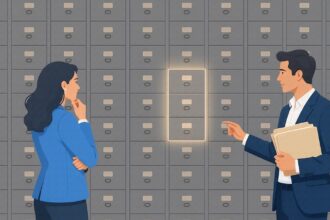
Electronic health records were an enormous change in the world of healthcare when they were universally adopted in 2009. Where previously health records were physical documents that sat inaccessibly in a hospital filing cabinet, now they live in the cloud where they can be accessed securely by patients who need them.
This was a major boon when it came to continuity of care. A patient who winds up in the hospital on vacation, for example, can easily have their entire health history pulled up in a matter of seconds.
EHRs also gave patients a lot more autonomy. Previously, people who had bloodwork done were basically given the rough cuts. Highlights that their physician found relevant. With EHRs, patients can see—and spend endless hours Googling—their every result. And while these developments have doubtlessly led doctors and nurses to receive questions they never would have otherwise anticipated, the general result has been good.
Patients have the option to take a much more active role in their own care.
EHRs, for all the good they accomplish, do create headaches. Nurses and doctors must learn how to use them in a way that is not only efficient but also HIPAA compliant.
Nurses are now trained on how to handle them at school. This implementation, though relatively minor in how it impacts the overall scope of nursing education, is a required part of the process now.
Wireless Patient Monitoring
Patient monitoring technology now makes it easier to get real-time data on many people at once. Nurses still do their rounds, of course, but the urgency is a little different. Remote monitoring devices allow hospital nurses to receive accurate readings on all of their patients.
Some devices also provide location monitoring, which can be beneficial in the case of patients who are able to move around more on hospital grounds. If Mr. McGuire’s heart monitor starts triggering an alert while he is in the hospital garden, nurses will know what is going on and where to find him immediately.
Nursing students are taught how to monitor this information in real time so that they will be ready to use the technology when they work in a real hospital.
Data Interpretation
Data is a major buzzword in the world of healthcare. Hospitals everywhere are looking for ways to leverage predictive analytics to anticipate problems and create proactive solutions that will benefit individual patients, improve efficiency, and inform the way they leverage care to the larger community.
That, of course, is a tall order. It begins with a staff full of nurses and doctors who know how to understand and apply data.
Granted, the extent to which this is possible is sometimes limited. High-level data interpretation is a career in its own right. Informatics nurses receive graduate degrees that are primarily focused on interpreting analytics and leveraging them to inform hospital policy.
BSN students do not need to understand data at this high level. They do need to be able to interpret basic reads and apply them to their work.
Is Data Analytics Technology Complicating Nursing?
Yes and no. A person who often says things like, “I’m just not very techy,” needn’t necessarily shy away from a career in healthcare. Data analytics technology is such a major aspect of every career now, that to say nursing is changing because of it is an almost pointlessly obvious statement.
Every career is being shaped by technology. Nursing, no more or less than many other jobs. The primary focus of the role is and will continue to be, patient care. While patient care evolves to incorporate new software or gadgets that improve monitoring, it does not fundamentally change.
It has always been about taking care of people in a way that reflects their natural dignity. Anyone who wants to make a living pursuing that noble cause will still find rewarding work in nursing.
What about seasoned veterans? People who have been working in healthcare for thirty years, long before there was even Google? Are their lives being complicated by nursing technology?
Well, sure. But what’s new about that? Healthcare technology has been in constant flux for thousands of years. Nurses are required to adapt. It is a career for which continued education is very literally a requisite aspect of the work. Nurses are required to log continuing education hours to retain their licenses.
Additionally, many hospitals will set up supplementary training sessions to make sure everyone on the team knows how to use newly implemented data analytics tools.
Data analytics technology has admittedly changed more rapidly in the last decade—but the basic responsibilities of the work remain the same. Nurses now, as ever, are required to stay on top of industry trends to deliver the highest possible level of patient care.