Cookies help us display personalized product recommendations and ensure you have great shopping experience.

By using this site, you agree to the Privacy Policy and Terms of Use.
Accept
SmartData CollectiveSmartData Collective
  • Analytics
    AnalyticsShow More
    predictive analytics risk management
    How Predictive Analytics Is Redefining Risk Management Across Industries
    7 Min Read
    data analytics and gold trading
    Data Analytics and the New Era of Gold Trading
    9 Min Read
    composable analytics
    How Composable Analytics Unlocks Modular Agility for Data Teams
    9 Min Read
    data mining to find the right poly bag makers
    Using Data Analytics to Choose the Best Poly Mailer Bags
    12 Min Read
    data analytics for pharmacy trends
    How Data Analytics Is Tracking Trends in the Pharmacy Industry
    5 Min Read
  • Big Data
  • BI
  • Exclusive
  • IT
  • Marketing
  • Software
Search
© 2008-25 SmartData Collective. All Rights Reserved.
Reading: Benefits of Cloud Computing (Virtualization) for IT Disaster Recovery
Share
Notification
Font ResizerAa
SmartData CollectiveSmartData Collective
Font ResizerAa
Search
  • About
  • Help
  • Privacy
Follow US
© 2008-23 SmartData Collective. All Rights Reserved.
SmartData Collective > IT > Cloud Computing > Benefits of Cloud Computing (Virtualization) for IT Disaster Recovery
Cloud Computing

Benefits of Cloud Computing (Virtualization) for IT Disaster Recovery

onlinetech
onlinetech
3 Min Read
SHARE

From faster recovery times to significant cost-savings and guaranteed backup, the benefits of  implementing cloud computing for both production and disaster recovery systems are worth deep consideration for any company running multiple, mission critical servers.

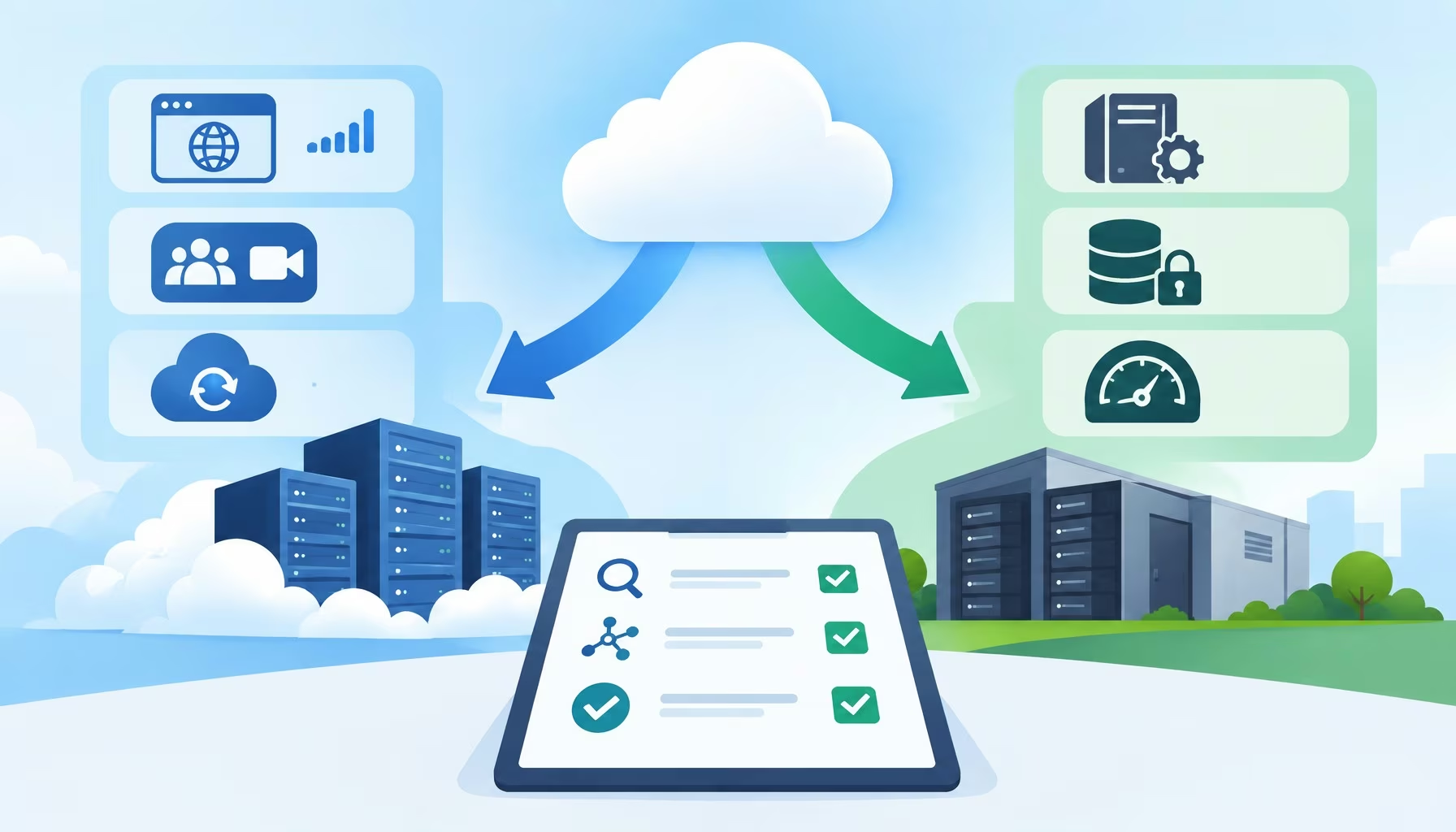
Below is a cheat sheet comparing the advantages and disadvantages of cloud computing and a traditional disaster recovery plan.

From faster recovery times to significant cost-savings and guaranteed backup, the benefits of  implementing cloud computing for both production and disaster recovery systems are worth deep consideration for any company running multiple, mission critical servers.

More Read

Image
Emerging Cloud Technologies
Revenue, Supply & Demand: Effects of the 2011 Hard Drive Shortage
Add More Fuel to Your Migration with these Parse Alternatives
Hadoop Toolbox: When to Use What
Enterprise CTOs: WayIn Will Provide New Capabilities to Your Organization

Below is a cheat sheet comparing the advantages and disadvantages of cloud computing and a traditional disaster recovery plan.

General Problems with Traditional Backup & Recovery

  • Highly error-prone, up to 40% failure rate
  • High risk of hardware, software, patch or application incompatibilities
  • Slow restore & recovery within physical environment
  • Requires significant storage

Traditional Disaster Recovery

Tape Backup

  • Cost-effective, but highly error-prone
  • May take days or weeks to recover
  • Complex, sequential recovery path
    • Locate identical server
    • Install operating system (OS)
    • Update all OS patches to make production
    • Install and configure all applications and patches
    • Reload data
    • Test and repeat above as errors suggest

Hot Site DR

  • More than doubles the cost of the production environment
  • Requires SAN/data replication between two sites for faster failover
  • Within a traditional DR environment, it requires two fully replicated solutions
  • The primary production center servers & applications must be replicated in the first and second data center on an ongoing basis.

Cloud Computing for Disaster Recovery

  • Lower overall costs – fewer physical servers to duplicate and maintain.
  • Faster recovery time objective (RTO), reducing recovery time from days or weeks to minutes or hours.
  • Ensures the entire server environment – OS, applications, patches & data – is synchronized and backed up.
  • Eliminates hardware dependencies – servers become hardware agnostic.
  • Allows non-identical hardware for production and disaster recovery – use premium physical server for production and a smaller one for disaster recovery without risking incompatability.
  • Eliminates tape backup, offsite tape backup and cold site DR
  • Faster online backup.
  • Hot site DR is more cost-effective

Online Tech recently hosted a webinar on the benefits of cloud computing, backup and IT disaster recovery with Mike Klein and Rod Mach of HiperLogic. View the slides, watch the video and/or read the transcript of the Cloud Computing and Disaster Recovery webinar for more details about how cloud computing changes disaster recovery.

Share This Article
Facebook Pinterest LinkedIn
Share

Follow us on Facebook

Latest News

street address database
Why Data-Driven Companies Rely on Accurate Street Address Databases
Big Data Exclusive
predictive analytics risk management
How Predictive Analytics Is Redefining Risk Management Across Industries
Analytics Exclusive Predictive Analytics
data analytics and gold trading
Data Analytics and the New Era of Gold Trading
Analytics Big Data Exclusive
student learning AI
Advanced Degrees Still Matter in an AI-Driven Job Market
Artificial Intelligence Exclusive

Stay Connected

1.2kFollowersLike
33.7kFollowersFollow
222FollowersPin

You Might also Like

Technology’s Impact on Accounting and Business

11 Min Read

Connection Cloud: Realizing Value from Proliferating Siloed Data Stores and BI

7 Min Read
Image
Big DataBusiness IntelligenceCloud ComputingCRMData ManagementData Warehousing

Hybrid Systems Integrations for Right Sized ERP

5 Min Read

EMR Market Trends: Cloud Computing and Economics

4 Min Read

SmartData Collective is one of the largest & trusted community covering technical content about Big Data, BI, Cloud, Analytics, Artificial Intelligence, IoT & more.

AI chatbots
AI Chatbots Can Help Retailers Convert Live Broadcast Viewers into Sales!
Chatbots
giveaway chatbots
How To Get An Award Winning Giveaway Bot
Big Data Chatbots Exclusive

Quick Link

  • About
  • Contact
  • Privacy
Follow US
© 2008-25 SmartData Collective. All Rights Reserved.
Go to mobile version
Welcome Back!

Sign in to your account

Username or Email Address
Password

Lost your password?