We use cookies, including third-party cookies from Google to serve personalized ads through AdSense, to operate this site and understand how it is used. By continuing to browse, you accept this use. See our Privacy Policy and Terms of Use for details, including how to opt out of personalized advertising.
Accept
SmartData CollectiveSmartData Collective
  • Analytics
    AnalyticsShow More
    chatgpt image jul 21, 2026, 04 34 30 pm
    4 Core Benefits of Predictive Maintenance after Vibration Analysis
    10 Min Read
    How Does Data Mining Boost Customer Satisfaction in Logistics? Harnessing Analytics for Results -- AI-generated illustration
    How Does Data Mining Boost Customer Satisfaction in Logistics? Harnessing Analytics for Results
    11 Min Read
    chatgpt image jul 13, 2026, 04 23 45 pm
    How Data Analytics Helps Companies Improve User Engagement
    19 Min Read
    chatgpt image jul 13, 2026, 03 59 46 pm
    How Data Analytics Improves Multi-Location Search Strategies
    10 Min Read
    cybersecurity efforts
    How Behavioral Analytics and AI Are Redefining Cybersecurity for Boca Raton Businesses
    14 Min Read
  • Big Data
  • BI
  • Exclusive
  • IT
  • Marketing
  • Software
Search
© 2008-25 SmartData Collective. All Rights Reserved.
Reading: How Credit Providers and Lenders Use Data Effectively
Share
Notification
Font ResizerAa
SmartData CollectiveSmartData Collective
Font ResizerAa
Search
  • About
  • Help
  • Privacy
Follow US
© 2008-23 SmartData Collective. All Rights Reserved.
SmartData Collective > Big Data > How Credit Providers and Lenders Use Data Effectively
Big DataExclusiveFintech

How Credit Providers and Lenders Use Data Effectively

Advances in big data technology are leading to some major breakthroughs in the financial sector.

Alex Blackwell
Alex Blackwell
5 Min Read
big data is changing the future of mortgage and credit card processing
Shutterstock Photo License - Orathai Mayoeh
SHARE

Big data technology has had massive implications for the financial industry. Banks, credit card companies and other financial service providers are leveraging big data in unprecedented ways.

Contents
  • Initial Approval
  • For Underwriting and Funding
  • To Minimize Default Rates
    • To Reduce Fraud

One of the biggest benefits of big data is with loan and mortgage processing. The use of data can be crucial for credit card companies and those offering loans and mortgages. The Forbes Technology Council discussed these benefits in an article last spring.

The ability to carry out checks on credit histories, income, employment and expenses can play a huge role to learn from previous customers and determine which are the best customers to pursue and which to avoid.

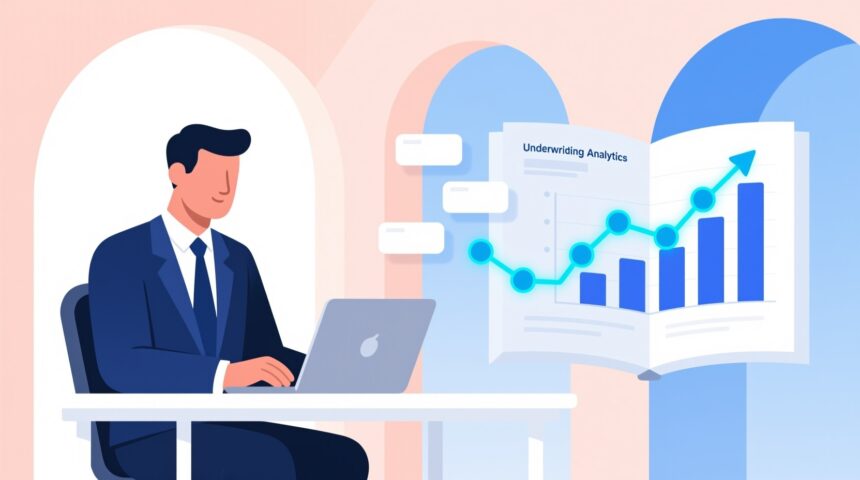
We speak to two finance startup founders to get a better idea of how they use data effectively to do underwriting, grow and scale their businesses.

More Read

ai for social media
How AI Helps Businesses Get More From Social Media
Big Data as a Service (BDaaS) Is the Next Big Thing!
Enter Nanosolar, a San Jose-based start-up that manufactures…
How to Create Users in Oracle BI (OBIEE) and WebLogic Tutorial
AI Can’t Replace Creativity When Crafting Digital Content

Initial Approval

Data is vital for the initial approval of a credit card or loan. A customer’s journey typically starts with filling in a few details via an online form, often taking around 5 to 10 minutes. From this, the lender is able to determine a customer’s profile and whether they meet the initial criteria which might be having a certain minimum age (e.g 18 or 21), having a permanent residence and regular employment.

This initial data can help siphon out any applicants who will not be eligible and who are not worth pursuing.

For Underwriting and Funding

“For underwriting and deciding who is going to be approved for a loan, the use of data is everything,” explains Richard Dent of Finger Finance. This is a great example of how big data has changed the financial industry.

“We are always looking at data, including new customers that come in and fundamentally historical data and trying to spot trends of customers who paid us on time and who have not.”

“We use this data to change our decision rules, and this could let in more customers to the final stages or stop any that are not deemed worthy. We will find examples whereby a woman over 35 in a certain location and earning a certain amount have a 8% chance of defaulting on their loans. From here, we know that we can operate profitably at a 15% default rate – we will use data to alter our decision rules and look at this type of customer more favorably.”

To Minimize Default Rates

Trying to lower default rates is of paramount importance to credit card, mortgage and loan vendors. You ideally want to find customers who repay and do not default, even though this is inevitable. This is where loans like those that consolidate unsecured debt can be risky, as there are less assets to seize if the customer does not repay their loan. 

“We therefore try to find shared characteristics of customers who default,” continues Dent.

“Do they live in certain areas, have certain professions or is it the loan amount or credit limit that they cannot handle?”

“We will analyze this data constantly to improve our processes and lower the default rate wherever possible.”

To Reduce Fraud

“Fraud is a huge financial burden for us as a lender and credit provider,” explains Richard Allan of business loans provider Funding Zest.

“Whether it is through fake applicants or stolen details, fraudsters are always looking for new and innovative ways to game our system to loans with no intention of paying them back.”

“We use data to find any patterns in the fraud. There are some obvious cues when the name of the customer does not vaguely resemble their email address or if we have seen the same mobile number come up on various occasions.”

“Otherwise, we look for patterns in the time of day, number of applications and even loan amounts to spot fraud and avoid it from being a huge liability on our business.”

It is expected that big data will continue to change the trajectory of the financial industry for years to come.

TAGGED:data in financefinancial techmortgage data
Share This Article
Facebook Pinterest LinkedIn
Share

Follow us on Facebook

Latest News

The New Zlibrary Official Domain Makes The Website Address Different -- AI-generated illustration
How Search Engine Indexing Lags Behind Large-Scale Website Domain Migrations
News
How Great Content Moves Through A Marketing Ecosystem -- AI-generated illustration
How Great Content Moves Through A Marketing Ecosystem
Exclusive Infographic Marketing
What Your Brand Misses That Data Reveals -- AI-generated illustration
What Your Brand Misses That Data Reveals
Big Data Exclusive Infographic
5 Common Mistakes Businesses Make During the Risk Assessment Process -- AI-generated illustration
5 Common Mistakes Businesses Make During the Risk Assessment Process
Business Intelligence Exclusive Risk Management

Stay Connected

1.2KFollowersLike
33.7KFollowersFollow
222FollowersPin

You Might also Like

Shutterstock Licensed Photo - 2160981465 | Chay_Tee
Artificial Intelligence

Top 10 Financial Mistakes That Can Be Resolved with AI

30 Min Read
big data and lease accounting
Software

Top 5 Data-Driven Lease Accounting Software Solutions

9 Min Read
using genetic algorithms and machine learning for hedge funds
Machine Learning

How Genetic Algorithms and Machine Learning Apply to Investments

7 Min Read
big data and financial trading
Big DataExclusive

3 Key Ways Big Data Is Changing Financial Trading

6 Min Read

SmartData Collective is one of the largest & trusted community covering technical content about Big Data, BI, Cloud, Analytics, Artificial Intelligence, IoT & more.

AI and chatbots
Chatbots and SEO: How Can Chatbots Improve Your SEO Ranking?
Artificial Intelligence Chatbots Exclusive
ai in ecommerce
Artificial Intelligence for eCommerce: A Closer Look
Artificial Intelligence

Quick Link

  • About
  • Contact
  • Privacy
Follow US
© 2008-26 SmartData Collective. All Rights Reserved.
Welcome Back!

Sign in to your account

Username or Email Address
Password

Lost your password?