Cookies help us display personalized product recommendations and ensure you have great shopping experience.

By using this site, you agree to the Privacy Policy and Terms of Use.
Accept
SmartData CollectiveSmartData Collective
  • Analytics
    AnalyticsShow More
    predictive analytics risk management
    How Predictive Analytics Is Redefining Risk Management Across Industries
    7 Min Read
    data analytics and gold trading
    Data Analytics and the New Era of Gold Trading
    9 Min Read
    composable analytics
    How Composable Analytics Unlocks Modular Agility for Data Teams
    9 Min Read
    data mining to find the right poly bag makers
    Using Data Analytics to Choose the Best Poly Mailer Bags
    12 Min Read
    data analytics for pharmacy trends
    How Data Analytics Is Tracking Trends in the Pharmacy Industry
    5 Min Read
  • Big Data
  • BI
  • Exclusive
  • IT
  • Marketing
  • Software
Search
© 2008-25 SmartData Collective. All Rights Reserved.
Reading: Comparing Cloud Web Services
Share
Notification
Font ResizerAa
SmartData CollectiveSmartData Collective
Font ResizerAa
Search
  • About
  • Help
  • Privacy
Follow US
© 2008-23 SmartData Collective. All Rights Reserved.
SmartData Collective > Big Data > Data Mining > Comparing Cloud Web Services
Business IntelligenceData MiningData WarehousingPredictive Analytics

Comparing Cloud Web Services

TheodoreOmtzigt
TheodoreOmtzigt
6 Min Read
SHARE

In my continued quest to build an operational model that properly accounts for the costs of different cloud web services, I have reached back to the visual vocabulary of operational analysis. If it was good enough to build BMC Software I figured it would be good enough for this task.

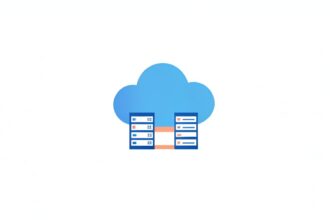
The following figure captures the typical resources in a modern data center. In the vocabulary of operational analysis we have servers and transactions, and the diagram depicts the read and write transactions going into different services such as filers or Internet, and read responses coming out. If you would build your own data center these servers and services would reflect all your capital and operational expenditures.


Different data centers select different resources to monetize. This makes the comparison between different providers so difficult: they are all selling something different.

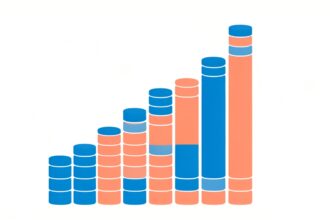
Let’s start with Amazon as the baseline since AWS tries to monetize all the resources in its data center, except for the internal routers. The next diagram shows the resource costs that Amazon charges you when running an application on their data centers.
More Read

AI analytics
AI-Based Analytics Are Changing the Future of Credit Cards
one in five people still lacks access to clean, safe drinking…
Decisions, decision management and analytics
Adopting a User Behavior Analytics (UBA) Solution
Decision Management Rumors Confirmed


Now compare that with a second provider, GoGrid. GoGrid does n…


In my continued quest to build an operational model that properly accounts for the costs of different cloud web services, I have reached back to the visual vocabulary of operational analysis. If it was good enough to build BMC Software I figured it would be good enough for this task.

The following figure captures the typical resources in a modern data center. In the vocabulary of operational analysis we have servers and transactions, and the diagram depicts the read and write transactions going into different services such as filers or Internet, and read responses coming out. If you would build your own data center these servers and services would reflect all your capital and operational expenditures.


Different data centers select different resources to monetize. This makes the comparison between different providers so difficult: they are all selling something different.

Let’s start with Amazon as the baseline since AWS tries to monetize all the resources in its data center, except for the internal routers. The next diagram shows the resource costs that Amazon charges you when running an application on their data centers.


Now compare that with a second provider, GoGrid. GoGrid does not monetize the incoming internet connection into their data center. So if you have a workload that reads a lot of data from the internet, GoGrid is fantastic. Also, GoGrid does not use a filer in their architecture, instead giving the server its own local disk instance that is managed and maintained. This works very well for web applications but does not work well for running a distributed file system instance. So running Hadoop on GoGrid is not attractive. The following diagram depicts GoGrid’s monetization strategy.


When you compare both diagrams it is clear that GoGrid is the better solution for running a web application server. On top of that, GoGrid offers free load balancers, which you would need to pay for separately on Amazon.

This visual vocabulary presented here makes it very easy to identify what types of workloads would fit on different cloud providers. It also shows you the high-cost items in the overall IT infrastructure you need to outsource your application.

To make the accounting complete, we also need a model of our workload that quantifies the storage, compute, and I/O requirements. For web application services the world of cloud solutions is well represented, but for utility computing this is not the case. The cost of filer and storage are significant and quickly become the overriding cost components for a workload. Furthermore, given the fact that storage costs accumulate even when you are not computing makes the on-demand argument less genuine. Finally, the use of cpu instance hours is not good enough for utility computing. Using the electric grid as comparison, I am consuming electrons, and pay accordingly. In proper utility computing I am consuming instructions and I/Os. These metrics are independent of the speed of the processors or filer on which I run and thus I do not need to guess what type of cpu-instance-hours I would consume. By providing instruction and I/O consumables providers can differentiate on the basis of capacity or latency in the same way that electricity providers do. Without that compensation model, utility computing is a ways off IMHO.

Link to original post

Share This Article
Facebook Pinterest LinkedIn
Share

Follow us on Facebook

Latest News

predictive analytics risk management
How Predictive Analytics Is Redefining Risk Management Across Industries
Analytics Exclusive Predictive Analytics
data analytics and gold trading
Data Analytics and the New Era of Gold Trading
Analytics Big Data Exclusive
student learning AI
Advanced Degrees Still Matter in an AI-Driven Job Market
Artificial Intelligence Exclusive
mobile device farm
How Mobile Device Farms Strengthen Big Data Workflows
Big Data Exclusive

Stay Connected

1.2kFollowersLike
33.7kFollowersFollow
222FollowersPin

You Might also Like

Happy New Year : 2009 Predictions and 2008 Recap

4 Min Read

Big Data Goes Real-Time

6 Min Read
email validation is possible with AI technology
Artificial Intelligence

AI Assists with Reputation Management through Email Validation

9 Min Read
Image
Data MiningData QualityData Visualization

SDC @ Strata – Impressions from the floor

3 Min Read

SmartData Collective is one of the largest & trusted community covering technical content about Big Data, BI, Cloud, Analytics, Artificial Intelligence, IoT & more.

ai is improving the safety of cars
From Bolts to Bots: How AI Is Fortifying the Automotive Industry
Artificial Intelligence
AI and chatbots
Chatbots and SEO: How Can Chatbots Improve Your SEO Ranking?
Artificial Intelligence Chatbots Exclusive

Quick Link

  • About
  • Contact
  • Privacy
Follow US
© 2008-25 SmartData Collective. All Rights Reserved.
Go to mobile version
Welcome Back!

Sign in to your account

Username or Email Address
Password

Lost your password?