Cookies help us display personalized product recommendations and ensure you have great shopping experience.

By using this site, you agree to the Privacy Policy and Terms of Use.
Accept
SmartData CollectiveSmartData Collective
  • Analytics
    AnalyticsShow More
    unusual trading activity
    Signal Or Noise? A Decision Tree For Evaluating Unusual Trading Activity
    3 Min Read
    software developer using ai
    How Data Analytics Helps Developers Deliver Better Tech Services
    8 Min Read
    ai for stock trading
    Can Data Analytics Help Investors Outperform Warren Buffett
    9 Min Read
    media monitoring
    Signals In The Noise: Using Media Monitoring To Manage Negative Publicity
    5 Min Read
    data analytics
    How Data Analytics Can Help You Construct A Financial Weather Map
    4 Min Read
  • Big Data
  • BI
  • Exclusive
  • IT
  • Marketing
  • Software
Search
© 2008-25 SmartData Collective. All Rights Reserved.
Reading: When Will Star Wars Performance Management Arrive?
Share
Notification
Font ResizerAa
SmartData CollectiveSmartData Collective
Font ResizerAa
Search
  • About
  • Help
  • Privacy
Follow US
© 2008-23 SmartData Collective. All Rights Reserved.
SmartData Collective > Business Intelligence > When Will Star Wars Performance Management Arrive?
Business Intelligence

When Will Star Wars Performance Management Arrive?

GaryCokins
GaryCokins
5 Min Read
SHARE

Let’s get a bit wild and imagine way out into the future about how a truly futuristic enterprise performance management (PM) framework might operate. (If you are impatient to read my blog on this, then go directly to the bottom and click on the link to the video. After viewing, hopefully then read this blog.)

Before we let our imaginations take off, we first need to agree on what an enterprise performance management framework is. I will stick with my long-established definition that PM is much broader than its typical description as a CFO initiative of better financial reporting with a bunch of dashboard dials. (As proof I have remained consistent, an in-depth description of PM is in my March, 2005 Corporate Performance Management – Myth or Reality?)

“Performance Management is the integration of multiple methodologies with each embedded with business analytics, such as segmentation analysis, and especially predictive analytics … to achieve the strategy and to make better decisions.”

A key part of this PM definition is the last words…


Let’s get a bit wild and imagine way out into the future about how a truly futuristic enterprise performance management (PM) framework might operate. (If you are impatient to read my blog on this, then go directly to the bottom and click on the link to the video. After viewing, hopefully then read this blog.)

More Read

The Flaw of the Hub-and-Spoke Architecture
PAW: New Challenges for Developing Predictive Analytics Solutions
Converting Data into Decisions
Responding Strategically to Cyber Attacks
Disasters by Damage Control or Risk Management?

Before we let our imaginations take off, we first need to agree on what an enterprise performance management framework is. I will stick with my long-established definition that PM is much broader than its typical description as a CFO initiative of better financial reporting with a bunch of dashboard dials. (As proof I have remained consistent, an in-depth description of PM is in my March, 2005 Corporate Performance Management – Myth or Reality?)

“Performance Management is the integration of multiple methodologies with each embedded with business analytics, such as segmentation analysis, and especially predictive analytics … to achieve the strategy and to make better decisions.”

A key part of this PM definition is the last words – to make better decisions. Ultimately we all need to understand and accept that good execution of an executive team’s strategy and its plans are the consequence of thousands of daily decisions made by employees at all levels in an organization. Today employees base these decisions on the limited information they have and often with their own self-interest or self-interest of the so-called silo department or process they work in. There can be conflict when decisions are not the best based because (1) the employee is unsure if they have the authority to make a type of decision, and (2) employee actions are not aligned with the strategic objectives formulated and constantly adjusted by the executive team.

A powerful lever for strategy execution is clarifying decision rights. As organizations grow in size, the approval process gets complex and foggy. Employees become unsure where one person’s accountability begins and another’s ends. Work-arounds then subvert formal hierarchical reporting relationships. Clarifying who has what decision-making authority and empowering decentralized decisions lower into the organization brings mission-critical agility .
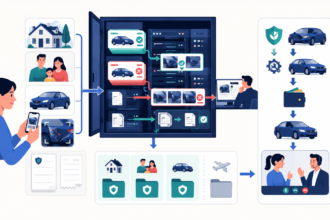
Now to the future. As decision making becomes more decentralized and is delegated deep down to every individual employee, how can technology be harnessed to aid employees to quickly perform research and make the increasing need to make speedy decisions? Will they go their hand-held smart phone that is increasingly becoming computer-like? Maybe, but it is clumsy to do a Google search with a smart phone and tough on the eyesight as well. And each employee’s smart phone may not be tailored with rule-based decision making tailored to your organization and constantly changing conditions.

Watch this 8 minute Sixth Sense video of Patti Maes, a researcher of a Massachusetts Institute of Technology laboratory. (Think Tom Cruise in the movie “Minority Report.”) The video demonstrates examples for consumers. Shift your thinking to how employees could apply the same future technology for enterprise performance management.

I have examples I can think of. What are yours?

Share This Article
Facebook Pinterest LinkedIn
Share

Follow us on Facebook

Latest News

Hidden AI, a risk?
Hidden AI, Real Risk: A Governance Roadmap For Mid-Market Organizations
Artificial Intelligence Exclusive Infographic
unusual trading activity
Signal Or Noise? A Decision Tree For Evaluating Unusual Trading Activity
Analytics Exclusive Infographic
Ai agents
AI Agent Trends Shaping Data-Driven Businesses
Artificial Intelligence Exclusive Infographic
Why Businesses Are Using Data to Rethink Office Operations
Big Data Exclusive

Stay Connected

1.2KFollowersLike
33.7KFollowersFollow
222FollowersPin

You Might also Like

Dealing with Disruptive Data: Advancing BI Connectors and Integrating SQL and NoSQL Databases

6 Min Read
challenge assumptions with big data and Hadoop
AnalyticsBig DataBusiness IntelligenceCloud ComputingCollaborative DataData ManagementData MiningData QualityData VisualizationData WarehousingHadoopHardwareITMapReduceOpen SourceSocial DataSoftwareSQLUnstructured DataWorkforce Data

A Complete Guide to Overcoming Executives’ Concerns about Hadoop

5 Min Read

A simple Data Transformation example…

5 Min Read

Big Leap Forward: Analytics Keynote at UK & Ireland SAP User Group Conference 2011

1 Min Read

SmartData Collective is one of the largest & trusted community covering technical content about Big Data, BI, Cloud, Analytics, Artificial Intelligence, IoT & more.

AI chatbots
AI Chatbots Can Help Retailers Convert Live Broadcast Viewers into Sales!
Chatbots
ai chatbot
The Art of Conversation: Enhancing Chatbots with Advanced AI Prompts
Chatbots

Quick Link

  • About
  • Contact
  • Privacy
Follow US
© 2008-25 SmartData Collective. All Rights Reserved.
Welcome Back!

Sign in to your account

Username or Email Address
Password

Lost your password?