In the arena of retailing, we’re all players. But many of us are also spectators, sitting high up in the stands and watching as the game plays out. Lately, the retailing game has been a blood sport, and household names—Circuit City, The Sharper Image, and Linens n’ Things among them—have been casualties.
We’ve been working with retailers since Walmart got its first data warehouse (my partner, Evan, was one of the system engineers on their first Teradata installation), since Kmart beamed POS data over satellites, and the apocryphal diapers-and-beer saga went mainstream. In those early days, it was all about analyzing POS data. Subsequent merchandise management and supplier exchange initiatives cemented the need for IT as both a strategic and operational enabler.
More Read

In the early 2000s, as they struggled to implement customer loyalty programs and endured criticism for over-investing in CRM technologies, retailers curtailed their IT spending. They had data warehouses—often several—and kept their attention focused on enterprise applications and e-business capabilities. With the exception of some beleaguered grocers and a sprinkling of catalog companies, we didn’t see many retailers spending on either consulting services or new software solutions.
But things are changing in retail, due in large part to five key areas that retailing executives have earmarked as strategic priorities:
Social media: It’s one thing to create a corporate avatar, set up a Twitter account, and lure customers to your Facebook fan page. It’s another thing altogether to proactively collaborate with customers on product ideas, garner feedback on service improvements, cement your brand messaging, and monitor the buzz. Retailers are getting serious about social media. After JCPenney ran a contest asking customers to post photos in their Penney-purchased apparel, the retailer’s Facebook fan base began increasing by a few thousand a day. “It’s a much more significant part of our marketing mix and it will continue to be a bigger part of our marketing mix,” said a Penney exec about social media.
Survey software: Put simply, retailers are formalizing feedback mechanisms, and executing on their findings. Several retailers we work with have announced new “Voice of the Customer” programs, driven by C-level executives. While most large retailers continue to rely on market research, they’re combining it with customer surveys at the time of purchase in their brick-and-mortar locations as well as on-line. Discounts on future purchases not only get customers coming back, but shopping via different channels—customers who shop across multiple channels are known to be more profitable—thus increasing the retailer’s share of wallet.
Master Data Management: Retailers not only need to manage customer relationships, they must share that data across sales channels, locations, and brands. Retailers came late to the MDM party but they’ve taken a seat and are listening to the music. More than ever, retailing executives are seeing the business impact of so many silo-ed applications and are mandating a “single view” of their customers. MDM not only promises to help retailers harmonize individual customer records across channels and brands, it helps them reconcile their product catalogs and store locations and standardize pricing. Welcome to MDM, retailers, pull up a chair!
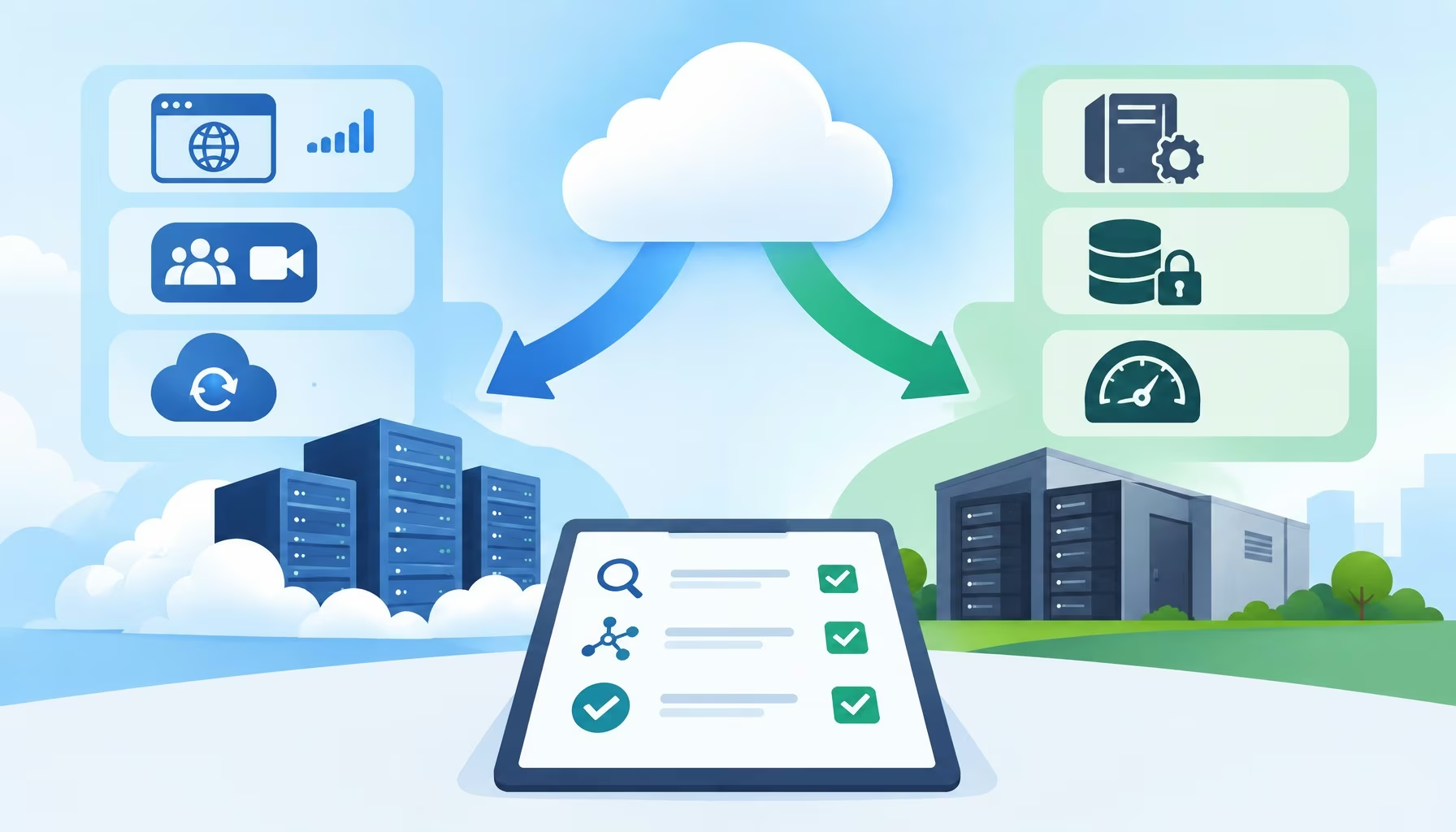
Retail in the cloud: Retailers still hamstrung by headcount and IT budget cuts are turning toward the software as service (SaaS) model to enhance both operational and analytic capabilities. Many are looking to hosted services companies like PivotLink and Retail Solutions to deliver self-service, web-based analytics or to provide POS and inventory data to suppliers. Larger retailers may look to outsource customer identification and data enrichment functions by leveraging third-party providers like Acxiom. Mid-market retailers in particular have been looking to the cloud to enhance their reporting and data quality capabilities without adding headcount or hardware.
On-demand reporting: As they increasingly compete on service, retailers are exploring ways to deliver customer intelligence to front-line sales staff. “We use a range of analysis tools, from basic reporting to statistical modeling tools,” explains Kakoli Seal, Vice President of Customer Insight and Database Marketing at Saks 5th Avenue. “But getting information into the hands of our sales associates so they can deliver superior service is a priority.” Saks 5th Avenue uses sophisticated clienteling software to deliver customer contact and other details to its associates. Similarly, a high-end electronics retailer uses mobile dashboard vendor Webalo to deliver purchase history to sales associates, thus enabling them to advise customers as they shop.
With all the emerging technology hoopla, retailers are still focused on two main issues: managing inventory levels and retaining customers. Both involve a little art, a little science, and leaders who are willing to question established industry norms. Indeed the days of unwieldy enterprise applications and IT infrastructure overhauls are a thing of the past in retailing. In their quest to be nimble, retailers are seeking new solutions—and fast.
Interested in learning more about how retailers are re-embracing business intelligence? Read Jill Dyché’s latest white paper: Information for Everyone: BI Evolving in Retail. Download the paper here.
photo by NNECAPA via Flickr (under Creative Commons license)
Link to original post