We use cookies, including third-party cookies from Google to serve personalized ads through AdSense, to operate this site and understand how it is used. By continuing to browse, you accept this use. See our Privacy Policy and Terms of Use for details, including how to opt out of personalized advertising.
Accept
SmartData CollectiveSmartData Collective
  • Analytics
    AnalyticsShow More
    Flat editorial illustration: The article contrasts passive follower totals with a behavioral path from attention and trust to cli
    Creator Analytics Beyond Follower Count: Seven Metrics That Measure Audience Behavior
    11 Min Read
    Flat editorial illustration: The article connects AI and marketing analytics with managerial judgment grounded in consumer behavi
    How an Online MBA in Marketing Connects AI and Data Analytics
    11 Min Read
    What Kind of Problem-Solving Distinguishes Data Analysts From Software Engineers -- AI-generated illustration
    What Kind of Problem-Solving Distinguishes Data Analysts From Software Engineers
    7 Min Read
    chatgpt image jul 21, 2026, 04 34 30 pm
    4 Core Benefits of Predictive Maintenance after Vibration Analysis
    10 Min Read
    How Does Data Mining Boost Customer Satisfaction in Logistics? Harnessing Analytics for Results -- AI-generated illustration
    How Does Data Mining Boost Customer Satisfaction in Logistics? Harnessing Analytics for Results
    11 Min Read
  • Big Data
  • BI
  • Exclusive
  • IT
  • Marketing
  • Software
Search
© 2008-25 SmartData Collective. All Rights Reserved.
Reading: The Future of Economics May Be in the Hands of Machine Learning
Share
Notification
Font ResizerAa
SmartData CollectiveSmartData Collective
Font ResizerAa
Search
  • About
  • Help
  • Privacy
Follow US
© 2008-23 SmartData Collective. All Rights Reserved.
SmartData Collective > Business Intelligence > The Future of Economics May Be in the Hands of Machine Learning
Business Intelligence

The Future of Economics May Be in the Hands of Machine Learning

Ari Amster
Ari Amster
6 Min Read
The Future of Economics May Be in the Hands of Machine Learning
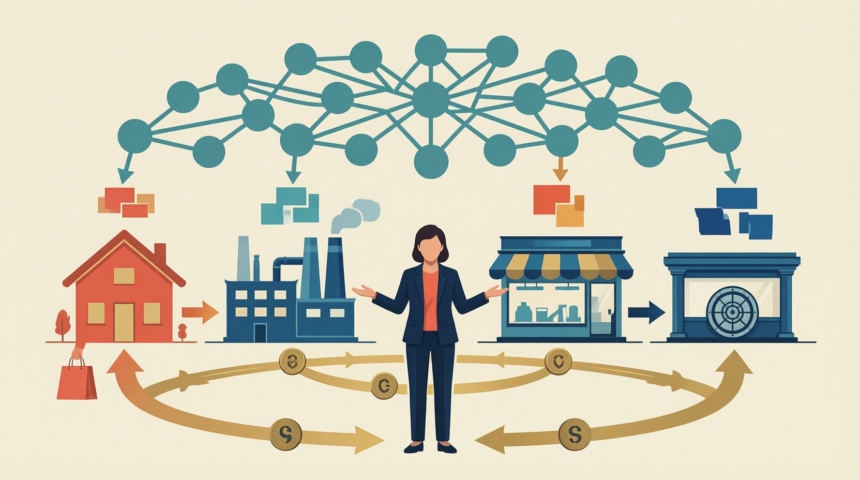
Illustration generated with Qwen Image.
SHARE

Economists have largely preferred to act within their own field and interpretations. However, the rise of big data challenges, data analytics, and machine learning is beginning to change all that. In the summer of 2015, Susan Athey, a Professor of Economics of Technology at Stanford attracted a crowd of over 250 economists for a one-day instructive session on machine learning. In the article publinshed on Quora.com recounting the event, Athey stated that she thinks machine learning will have an “enormous impact” on the field of economics especially as economists learn to tailor their methodologies to include machine learning.

Why Economists Need Machine Learning

Historically, the discipline of economics has always been categorized among the social sciences, which means the word ‘science’ should be understood as somewhat loosely applied. Unlike the natural sciences, which are prescribed as strictly positivist and bound by the ideals of empirical truth to only build theories around quantitative data that can be measured and duplicated, social sciences are often influenced by observations that are open to interpretation. In social sciences, research models can be eclectic, built from combination of qualitative and quantitative data. And conclusions drawn from models like that are prone to the influence of bias and personal ideologies. Not that hard sciences can’t also be prone to bias and ideology. It’s just that the whole point of the strict empirical research model is to limit the potential for bias and interpretive ambiguity.

Tragedy of the Commons and Other Ideological Chinks in Economics Models

More Read

What To Know About The Impact of Data Quality and Quantity In AI
Using Link Analysis to Plan the Healthcare System
The Role of Decision Requirements in the Analytical Life Cycle
An App Model Approach to Big Data
Can Big Data Help Bridge the Workplace Skills Gap?

One stark example of nebulous ideology clouding economics theory came from Alan Greenspan. Arguably the most famous economist living, Greenspan served as Chairman of the Federal Reserve from 1987 to 2006, but had served every U.S. president in some capacity dating back to the Richard Nixon administration. In the aftermath of the 2007 economic crisis, Greenspan was called to testify before a congressional hearing. In his testimony he said he had subscribed to a laissez faire style of free-market capitalism, which appeared to be worked fine throughout the course of his 40-year public career. It’s common knowledge that Greenspan’s interpretation of his economic theory was heavily influenced by his personal association with the objectivist author Ayn Rand, whose ideology treats self interest as the highest moral virtue, but does not identify community, sustainability, or collective good as constituents of self interest. That’s the part that’s open to interpretation. In his testimony to congress he admitted that his flawed ideology had clouded his judgement to the point that he had failed to recognize that his radically unregulated market economy left no incentives for executives in the banking sector to preserve the interests of their shareholders. According to a report published in The Guardian, Greenspan admitted that without his ideological influences he probably would have seen the subprime mortgage crisis coming.

So Much Complexity is Hard to Manage

Economists like Greenspan are only human, and economics is a complex and nuanced combination of art and science. It’s far more complex than say, business management. Economists concern themselves with the broad implications of public policy, as opposed to just building models that predict prices or quantities of commodities like the ones used in quantitative trading. Economists study things like the effects of price changes, or price discrimination, or changes to the minimum wage, or the efficacy of advertising and marketing initiatives across the full scope of social contexts. And it’s a tricky game because so many factors can influence the numerical value of a certain metric, or the price of a commodity or index, especially at the macro level. The goal of economics has always been to draw causal connections based on complex sets of conditions, like what may happen if some change occurs, or doesn’t occur.

In the Future, Robots Will Study Social Science

Because big data is so new, the debate over which analytics model is best suited to serve social science differences; Spark vs. Hadoop, for example. Meanwhile there are critical differences in how machine learning methodologies and social sciences establish their research parameters, which will need to be reconciled. Athey says she is “exploring the idea that you might take the strengths and innovations of ML methods, but apply them to causal inference.”


Share This Article
Facebook Pinterest LinkedIn
Share

Follow us on Facebook

Latest News

From Hiring To Payroll: Managing HR Data Across Business Systems -- AI-generated illustration
From Hiring To Payroll: Managing HR Data Across Business Systems
Big Data Business Intelligence Infographic
Flat editorial illustration: The article is about automating the collection, preparation, and delivery of marketing data across p
From Data to Dashboards: 5 Marketing Reporting Automation Software Picks
Big Data Business Intelligence Exclusive
Flat editorial illustration: The article contrasts passive follower totals with a behavioral path from attention and trust to cli
Creator Analytics Beyond Follower Count: Seven Metrics That Measure Audience Behavior
Analytics Exclusive
Flat editorial illustration: The article surveys AI finance apps that analyze and explain financial information, sometimes take a
10 Financial Apps Empowered by AI: Assistants and Agents
Artificial Intelligence Exclusive Fintech

Stay Connected

1.2KFollowersLike
33.7KFollowersFollow
222FollowersPin

You Might also Like

Increased Demands for BI within Healthcare IT
Business IntelligenceData MiningData WarehousingPolicy and Governance

Increased Demands for BI within Healthcare IT

4 Min Read
Businesses Find Brilliant New Ways to Leverage the Power of Data
Big Data

Businesses Find Brilliant New Ways to Leverage the Power of Data

5 Min Read
dreamstime l 131675911
Artificial IntelligenceExclusive

Can AI Help You Get Better Headshots?

9 Min Read
A Tale of Two Seas
Best PracticesBusiness IntelligenceData QualityData Warehousing

A Tale of Two Seas

6 Min Read

SmartData Collective is one of the largest & trusted community covering technical content about Big Data, BI, Cloud, Analytics, Artificial Intelligence, IoT & more.

AI chatbots
AI Chatbots Can Help Retailers Convert Live Broadcast Viewers into Sales!
Chatbots
Chatbots and SEO: How Can Chatbots Improve Your SEO Ranking?
Artificial Intelligence Chatbots Exclusive

Quick Link

  • About
  • Contact
  • Privacy
Follow US
© 2008-26 SmartData Collective. All Rights Reserved.
Welcome Back!

Sign in to your account

Username or Email Address
Password

Lost your password?