We use cookies, including third-party cookies from Google to serve personalized ads through AdSense, to operate this site and understand how it is used. By continuing to browse, you accept this use. See our Privacy Policy and Terms of Use for details, including how to opt out of personalized advertising.
Accept
SmartData CollectiveSmartData Collective
  • Analytics
    AnalyticsShow More
    chatgpt image jul 21, 2026, 04 34 30 pm
    4 Core Benefits of Predictive Maintenance after Vibration Analysis
    10 Min Read
    How Does Data Mining Boost Customer Satisfaction in Logistics? Harnessing Analytics for Results -- AI-generated illustration
    How Does Data Mining Boost Customer Satisfaction in Logistics? Harnessing Analytics for Results
    11 Min Read
    chatgpt image jul 13, 2026, 04 23 45 pm
    How Data Analytics Helps Companies Improve User Engagement
    19 Min Read
    chatgpt image jul 13, 2026, 03 59 46 pm
    How Data Analytics Improves Multi-Location Search Strategies
    10 Min Read
    cybersecurity efforts
    How Behavioral Analytics and AI Are Redefining Cybersecurity for Boca Raton Businesses
    14 Min Read
  • Big Data
  • BI
  • Exclusive
  • IT
  • Marketing
  • Software
Search
© 2008-25 SmartData Collective. All Rights Reserved.
Reading: Workers’ Compensation Platform Uses Big Data For Better Outcomes
Share
Notification
Font ResizerAa
SmartData CollectiveSmartData Collective
Font ResizerAa
Search
  • About
  • Help
  • Privacy
Follow US
© 2008-23 SmartData Collective. All Rights Reserved.
SmartData Collective > Big Data > Workers’ Compensation Platform Uses Big Data For Better Outcomes
Big DataExclusive

Workers’ Compensation Platform Uses Big Data For Better Outcomes

Andrej Kovacevic
Andrej Kovacevic
6 Min Read
Workers’ Compensation Platform Uses Big Data For Better Outcomes
Illustration generated with Qwen Image.
SHARE

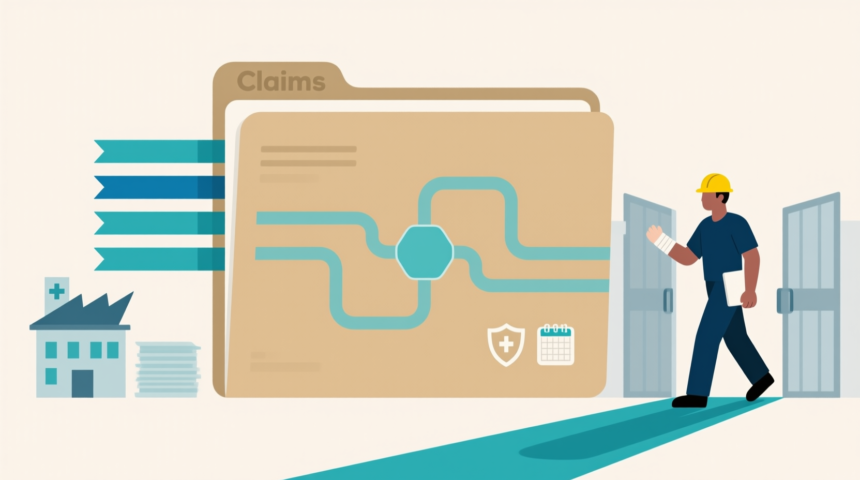
We have talked extensively about the fields that rely most heavily on big data. The insurance industry is one of the companies investing the most in big data technology. Exactly one year ago today, SNS Telecom & IT published a report highlighting the demand for big data in the insurance industry. The report showed that insurers spent $2.4 billion on big data in 2018 alone. However, the report didn’t go into the nuances of the types of insurance that are affected by big data. Workers’ compensation is one of the fields of insurance that has been most affected.

Contents
  • Big Data is Turning the Workers’ Compensation Profession Inside-Out
  • Injury Understanding and Course of Treatment
  • Improved Outcomes and Efficiency
    • Big Data is Changing the Future of Workers’ Compensation in Promising Ways

Big Data is Turning the Workers’ Compensation Profession Inside-Out

Big data is already making a major impact in one of the largest insurance sectors in the country: workers’ compensation. The industry has been slow to adapt big data and technology that provides actionable insights and changes. Dax Cragen, a CEO and leading expert on workers’ compensation, has already discussed the benefits of big data in his field. Many others are following suit. myDataSense, a platform that is building intelligence programs for workers’ compensation, is already finding success. The platform is using big data to determine the risks and benefits of drug therapy. The platform monitors the patient to be able to determine thresholds, when passed, indicate that a person is at “high-risk.” The risk can be defined by physicians or workers’ compensation officials. The big data approach has many benefits, such as allowing officials to better analyze the pharmacy or doctor the applicant is using. Big data will be able to determine which doctors prescribe high opioid dosages or which have an unreasonably high amount of the same claims. IBM is one of the companies that believes big data is going to have an even bigger role on the insurance industry in the future. Some of the most promising applications haven’t even been identified yet.

Injury Understanding and Course of Treatment

Insurers have an abundance of data which often goes un-utilized. This data is now being incorporated into big data solutions. Data analytics is being used to help injured workers faster and for insurers to better understand the issues that workers with a specific injury face. Big data allows for faster treatment and a better understanding of what the right treatment option is based on similar cases. The solutions that are being developed will be better able to allocate resources and the right people to increase employee outcomes. Developers claim that while insurers have a lot of data, it’s more important that the data is used properly to help with claims. Big data also has the potential to lower medical costs, which account for 60% of all claim costs.

Improved Outcomes and Efficiency

Claims are often tedious to manage and even longer to settle. Injuries and quality care must be a priority, and data analytics can better help management process claims and deliver better outcomes for employees. Faster and more efficient, Liberty Mutual is using big data to help control costs of claims in three key ways:

More Read

Finding a Holistic Predictive Analytics Approach to Boost Employee Retention
From Prosper202 To Adroll: Evolution Of Machine Learning In Digital Ads
Why Does Data Decay so Fast?
Using Big Data to Sell to Individuals Instead of Stereotypes
HIPAA Breach Lessons Learned
  1. Insurers are working on methods of determining if a claim deserves compensation. Not all claims, even if they do occur at work, deserve compensation. Models are able to be produced using big data to minimize the risk of paying a fraudulent or unnecessary claim.
  2. Insurers want to keep costs down, and one method is through an escalation alert system which alerts insurers that a particular claim may be high-cost. The alert allows for the claim to become a priority and allows for faster treatment to take place.
  3. Insurers are also using big data to provide better outcomes and comfort to claimants. The big data solutions will provide faster, more robust treatment options that save insurers money while allowing those injured to reduce their risks of long-term side effects.

The return to work process is also being improved with big data able to determine how fast a person can return to work, or how long the person should remain out of work based on new symptoms or conditions. The result? Better outcomes and lower costs.

Big Data is Changing the Future of Workers’ Compensation in Promising Ways

The arena of big data is having a very positive impact on many professionals in the insurance industry. In recent years, most of the discussions have focused on the use of big data in health insurance, because healthcare accounts for such a large share of the economy. However, workers’ compensation insurers are also going to be highly dependent on big data moving forward. IT will be interesting to see how wide-reaching their use of big data will be.

TAGGED:big datacompensation platformdata analyticsinsurance sectorsworkers compensation
Share This Article
Facebook Pinterest LinkedIn
Share
ByAndrej Kovacevic
Follow:
Andrej is also a dedicated writer and digital evangelist. He is pursuing an ongoing mission to share the benefits of his years of hard-won expertise with business leaders and marketing professionals everywhere. He is a contributor to a wide range of technology-focused publications, where he may be found discussing everything from neural networks and natural language processing to the latest in smart home IoT devices. If there's a new and exciting technology, there's a good chance Andrej is writing about it somewhere out there.

Follow us on Facebook

Latest News

Flat editorial illustration: The article's core relationship is the brand protection response workflow: detection of a phishing o
Data & AI Architecture Focus: 6 Best Brand Protection Tools for Phishing and Impersonation
IT Security
Server racks with cloud and user interface panels
Cloud Infrastructure and Workload Migration: A Data-Driven Look at VMware Alternatives in Europe
Cloud Computing Exclusive
Synthetic Data vs Real Web Data: Comparison, Limitations, and Collection Methods  -- AI-generated illustration
Synthetic Data vs Real Web Data: Comparison, Limitations, and Collection Methods 
Big Data Exclusive
Illustration of mobile analytics dashboards with ad performance charts connected to backend databases
11 Best Sisense Alternatives for Embedded Analytics
Business Intelligence Exclusive

Stay Connected

1.2KFollowersLike
33.7KFollowersFollow
222FollowersPin

You Might also Like

data analytics for trademark registration
AnalyticsExclusiveNews

Optimizing Trademark Registration with Data Analytics

6 Min Read
china zip code business intelligence
Business IntelligenceBusiness RulesExclusive

How China’s Zipcode System Fuels Business Intelligence

7 Min Read
Your Guide To Using Big Data For Microsoft Dynamics Projects
Big DataExclusive

Your Guide To Using Big Data For Microsoft Dynamics Projects

6 Min Read
Is Big Data Necessary For Creating A Successful Online Business?
Big DataExclusive

Is Big Data Necessary For Creating A Successful Online Business?

5 Min Read

SmartData Collective is one of the largest & trusted community covering technical content about Big Data, BI, Cloud, Analytics, Artificial Intelligence, IoT & more.

AI chatbots
AI Chatbots Can Help Retailers Convert Live Broadcast Viewers into Sales!
Chatbots
How To Get An Award Winning Giveaway Bot
Big Data Chatbots Exclusive

Quick Link

  • About
  • Contact
  • Privacy
Follow US
© 2008-26 SmartData Collective. All Rights Reserved.
Welcome Back!

Sign in to your account

Username or Email Address
Password

Lost your password?