We use cookies, including third-party cookies from Google to serve personalized ads through AdSense, to operate this site and understand how it is used. By continuing to browse, you accept this use. See our Privacy Policy and Terms of Use for details, including how to opt out of personalized advertising.
Accept
SmartData CollectiveSmartData Collective
  • Analytics
    AnalyticsShow More
    chatgpt image jul 21, 2026, 04 34 30 pm
    4 Core Benefits of Predictive Maintenance after Vibration Analysis
    10 Min Read
    How Does Data Mining Boost Customer Satisfaction in Logistics? Harnessing Analytics for Results -- AI-generated illustration
    How Does Data Mining Boost Customer Satisfaction in Logistics? Harnessing Analytics for Results
    11 Min Read
    chatgpt image jul 13, 2026, 04 23 45 pm
    How Data Analytics Helps Companies Improve User Engagement
    19 Min Read
    chatgpt image jul 13, 2026, 03 59 46 pm
    How Data Analytics Improves Multi-Location Search Strategies
    10 Min Read
    cybersecurity efforts
    How Behavioral Analytics and AI Are Redefining Cybersecurity for Boca Raton Businesses
    14 Min Read
  • Big Data
  • BI
  • Exclusive
  • IT
  • Marketing
  • Software
Search
© 2008-25 SmartData Collective. All Rights Reserved.
Reading: How Big Data Is Revolutionizing the Credit Scoring Industry
Share
Notification
Font ResizerAa
SmartData CollectiveSmartData Collective
Font ResizerAa
Search
  • About
  • Help
  • Privacy
Follow US
© 2008-23 SmartData Collective. All Rights Reserved.
SmartData Collective > Big Data > How Big Data Is Revolutionizing the Credit Scoring Industry
Big Data

How Big Data Is Revolutionizing the Credit Scoring Industry

Anand
Anand
4 Min Read
How Big Data Is Revolutionizing the Credit Scoring Industry
Illustration generated with Qwen Image.
SHARE

Assessing the loan-worthiness of an applicant is no easy task. Credit scores, a three digit metric that offers lenders a way to benchmark your worthiness against the average applicant, is often seen as a flawed system that punishes the “guilty” with a sentence that is much larger than the “crime”.

Assessing the loan-worthiness of an applicant is no easy task. Credit scores, a three digit metric that offers lenders a way to benchmark your worthiness against the average applicant, is often seen as a flawed system that punishes the “guilty” with a sentence that is much larger than the “crime”. Regardless of what the common perception of a credit score is, the bottom line is that your credit score matters and has a huge impact on how easily you can get loans and what rates you are charged for it.

But over the past few years, a number of new start-ups have cropped up that have redefined the way credit scoring is done. Neo Finance, for example, is a Palo Alto based lender for auto loan borrowers. Instead of using the conventional FICO scores to assess the credit worthiness of the borrower, Neo Finance looks at the applicant’s job history and the quality of their connections on LinkedIn to assess their loan worthiness.

While the viability of such social credit scoring mechanisms is to be assessed over the long term, the bigger impact to the industry is being dealt through sophisticated big data assessment systems. Unlike the FICO score that primarily uses an applicant’s transaction history to assess their loan worthiness, these new start-ups make use of a much larger data pool. FICO scores are flawed in that even if an applicant has enough credit worthiness, their score could be impacted by minor oversight on their part like failure to notice a payment deadline. Also, due to the confidential nature of these reports, most applicants have no way to know or contest these figures, unless they pay money to obtain the report.

More Read

vpn for android
Growth of Big Data Requires Android Users to Have VPNs
Will Big Data Make the Difference in the Volvo Ocean Race?
9 Metrics to Measure Social Media Marketing Success
The Case for Using Data Virtualization for Big Data Analytics
How the Healthcare Industry Can Save Big with Big Data

Take the example of ZestFinance. This company makes use of all kinds of data to assess the loan worthiness of a customer. The company is co-founded by Google’s former Chief Information Officer and considers all data about a customer as credit data. The company uses technology that analyzes thousands of variables including factors like the number of times a debtor has moved house, how well they use capitalization on a web form, etc. to build a profile of an applicant that assesses the risk in a much more efficient way than a FICO score does.

It will be a while before such disruptive new technologies make their way to mainstream lending via banking institutions. At present, most companies owning such alternate credit worthiness measurement systems have their own lending infrastructure. The next decade should see such technologies find greater adoption among banks.

According to a report on CreditRepair.com, one of the leading credit repair companies in the United States, 37% of Americans have a mortgage on their house with another 29% paying a car loan with over 69% paying above the minimum for their credit card debt or loans. Given this scenario, there is a huge untapped market for people shunned by the traditional banking sector to be able to benefit from alternate lending assessment systems. The next decade will tell us how credit scoring evolves and the impact big data will have on the lives of people in need of financial help. 

Share This Article
Facebook Pinterest LinkedIn
Share
ByAnand
Follow:
Anand Srinivasan is the founder of Hubbion, a suite of business apps. The Hubbion Project Management app was ranked among the top 20 in its category for 2017 by Capterra.

Follow us on Facebook

Latest News

Analyst points at colorful circular data dashboard on screen - information technology business metrics
How Fragmented Workplace Tech Undermines Reliable Business Metrics and Reporting
Cloud Computing Exclusive Infographic IT
Using Multi-Source Data and Analytics to Detect Operational Drift Across Franchise Networks -- AI-generated illustration
Using Multi-Source Data and Analytics to Detect Operational Drift Across Franchise Networks
Exclusive Infographic
Beyond The First Impression: The Long-Lasting Impact Of Sensory Marketing -- AI-generated illustration
Beyond The First Impression: The Long-Lasting Impact Of Sensory Marketing
Infographic Marketing
The Infrastructure Gap Slowing Data Center Growth -- AI-generated illustration
The Infrastructure Gap Slowing Data Center Growth
Big Data Cloud Computing Exclusive Infographic IT

Stay Connected

1.2KFollowersLike
33.7KFollowersFollow
222FollowersPin

You Might also Like

data security issues with annotation outsourcing
Big DataExclusiveSecurity

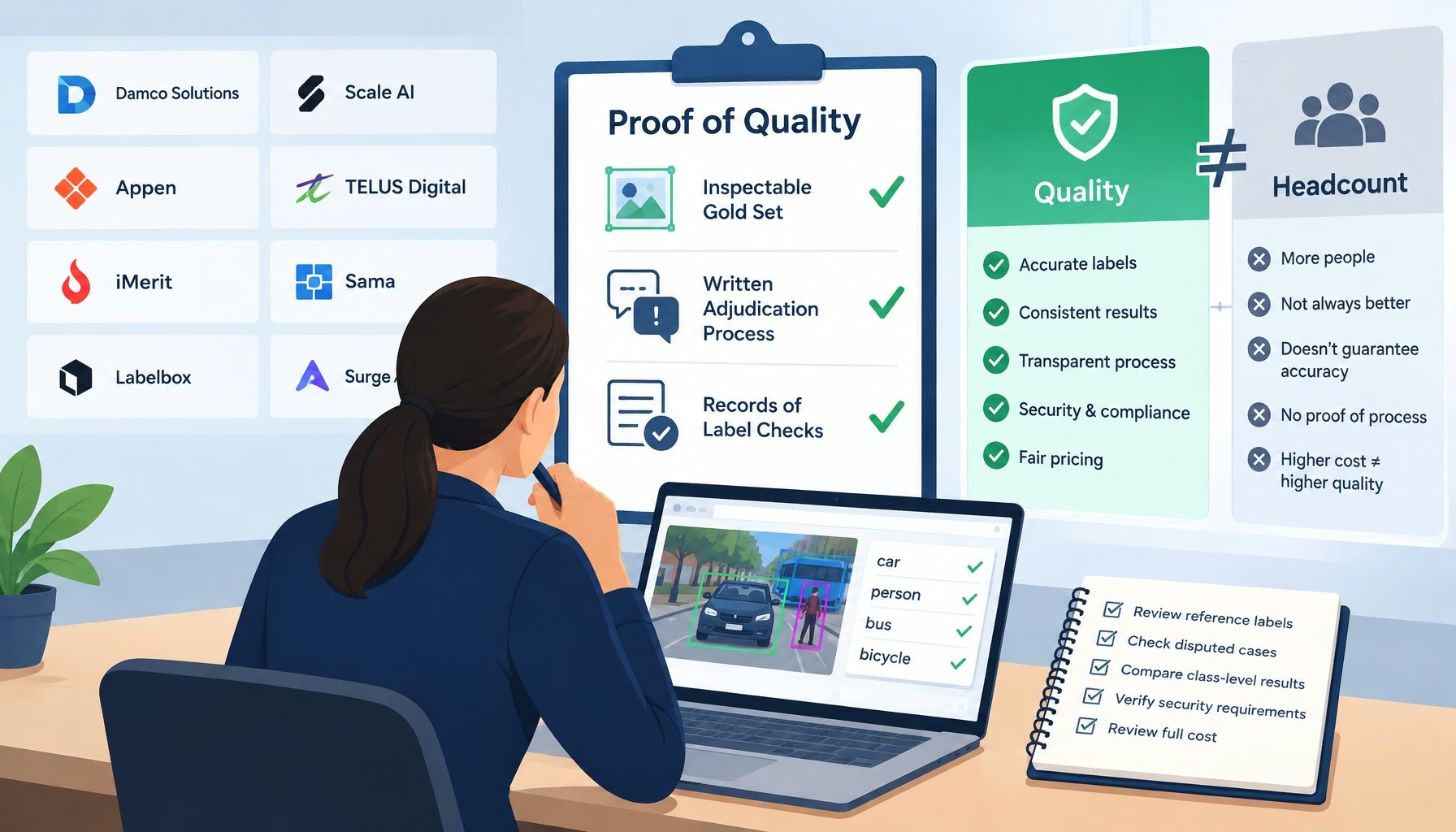
Data Annotation Outsourcing and Risk Mitigation Strategies

10 Min Read
The Physical Size of Big Data [INFOGRAPHIC]
Big DataData Visualization

The Physical Size of Big Data [INFOGRAPHIC]

1 Min Read
2 Ways Big Data and Little Data Are the Perfect Couple
AnalyticsBig DataData Visualization

2 Ways Big Data and Little Data Are the Perfect Couple

5 Min Read
How to Recycle Old IT Equipment and Keep Your Data Safe
Big DataCollaborative DataWorkforce Data

How to Recycle Old IT Equipment and Keep Your Data Safe

5 Min Read

SmartData Collective is one of the largest & trusted community covering technical content about Big Data, BI, Cloud, Analytics, Artificial Intelligence, IoT & more.

Chatbots and SEO: How Can Chatbots Improve Your SEO Ranking?
Artificial Intelligence Chatbots Exclusive
From Bolts to Bots: How AI Is Fortifying the Automotive Industry
Artificial Intelligence

Quick Link

  • About
  • Contact
  • Privacy
Follow US
© 2008-26 SmartData Collective. All Rights Reserved.
Welcome Back!

Sign in to your account

Username or Email Address
Password

Lost your password?