
We use cookies, including third-party cookies from Google to serve personalized ads through AdSense, to operate this site and understand how it is used. By continuing to browse, you accept this use. See our Privacy Policy and Terms of Use for details, including how to opt out of personalized advertising.
Accept
SmartData CollectiveSmartData Collective
  • Analytics
    AnalyticsShow More
    chatgpt image jul 21, 2026, 04 34 30 pm
    4 Core Benefits of Predictive Maintenance after Vibration Analysis
    10 Min Read
    How Does Data Mining Boost Customer Satisfaction in Logistics? Harnessing Analytics for Results -- AI-generated illustration
    How Does Data Mining Boost Customer Satisfaction in Logistics? Harnessing Analytics for Results
    11 Min Read
    chatgpt image jul 13, 2026, 04 23 45 pm
    How Data Analytics Helps Companies Improve User Engagement
    19 Min Read
    chatgpt image jul 13, 2026, 03 59 46 pm
    How Data Analytics Improves Multi-Location Search Strategies
    10 Min Read
    cybersecurity efforts
    How Behavioral Analytics and AI Are Redefining Cybersecurity for Boca Raton Businesses
    14 Min Read
  • Big Data
  • BI
  • Exclusive
  • IT
  • Marketing
  • Software
Search
© 2008-25 SmartData Collective. All Rights Reserved.
Reading: Data Quantity, or Data Quality?
Share
Notification
Font ResizerAa
SmartData CollectiveSmartData Collective
Font ResizerAa
Search
  • About
  • Help
  • Privacy
Follow US
© 2008-23 SmartData Collective. All Rights Reserved.
SmartData Collective > Big Data > Data Quality > Data Quantity, or Data Quality?
Data Quality

Data Quantity, or Data Quality?

martindoyle
martindoyle
7 Min Read
Data Quantity, or Data Quality?
Illustration generated with FLUX.2 [klein 4B] via Cloudflare Workers AI.
SHARE

When we look at ways businesses embark on marketing campaigns, we can see that quantity is regarded as a good thing.

Contents
  • Maintaining a Virtual Address Book
  • What About Big Data?
  • The Business Case for Quality
  • Embarrassment of Riches
  • Finding Solutions

Lots of traffic – good. Viral posts are the Holy Grail: they generate thousands of page views every hour. Likes and shares: the more the merrier.

And from all of that traffic, and social interest, the business hopes for a high quantity of leads and conversions.

But when it comes to data, quantity in itself cannot drive profit and success. Simply having a lot of data does not help. In fact, it can muddy the waters and make decision-making more difficult, increasing cost and reducing efficiency.
More Read

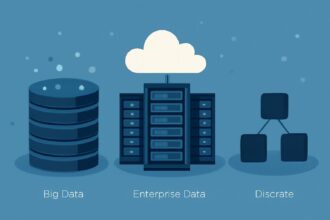
Big Data, Enterprise Data and Discrete Data
Data Governance: Managing Data as an Asset
Information Availability: Exploiting the Full Value of Information to Drive Business
How to Turn Your Data from Archenemy to Ally
How to Improve Your Receivables Position With Better Risk Analysis

So: quality and quantity are not mutually exclusive, but there is a relationship between them.

Maintaining a Virtual Address Book

As we become more digitally proficient, we all try to migrate data, rather than starting afresh.

Think about the last time you purchased a smartphone. Did you delete everything off your old device, and create all of your contacts from scratch? Or did you migrate data to the cloud, transferring it from the old device to a new one?

Naturally, hanging onto data is more convenient. And this has turned us into ‘data hoarders’. We hold on to data that  is well past its use-by date.

When we retain data, we also import and export it. That import and export process can introduce errors. Contact names, numbers and other pieces of data can be subtly different between different devices. You might have noticed this yourself: some records don’t save after you switch devices, and you have to edit them to get them to work.

What About Big Data?

When you consider the huge appetite for Big Data in business, the smartphone analogy looks shaky.  After all, Big Data is a good thing– isn’t it? Should we aim for quantity, first and foremost?

Big Data has been preened and cleaned. It has been standardised and processed so that businesses can understand it. There is a focus on quality and quantity. That’s why most Big Data comes from large companies that have already done the leg work.

In contrast, most of the raw data we all collect is not valuable until some kind of data quality process is put in place. This is why data scientists are so highly valued, they deliver clean data that is actionable.  If we simply dumped the contents of a million spreadsheets into a text file, this would be Big, but it certainly wouldn’t be beautiful.

The Business Case for Quality

Achieving a high standard of data quality is arguably not cheap. Achieving a high volume is. We could simply sit on the database forever, allowing it to grow without restriction. That would certainly be the cheapest way forward.

But to look at the cost, we have to weigh up waste and value – not just pricing

  • We can define waste as any activity that takes longer (or costs more) because of a low quality data set. This might be physical waste, like returned mail and discarded paper. It might be waste that takes other forms: wasted storage media, wasted space, wasted time.
  • In the same context, value is the importance assigned to a particular dataset; its place within the organisation. How valuable is a CRM that’s stuffed with records that will not validate or save? If the sales team are working from 2-year-old contact details, how valuable is that information compared to a fresh lead?

Consider the fact that 60-70 percent of enterprise IT budgets are spent on infrastructure and operations. Consider how unhelpful it is when we continually heap unsorted, inaccurate, invalid and decayed data into a CRM that is already struggling.

When we look at the way data is handled, the ‘cheapest’ option is always the most wasteful, and results in the lowest value. Worse still, any bad data within a database will spread to all integrated systems, derailing attempts to integrate those systems to improve efficiency.

At every stage, data should inform a decision. If it cannot immediately do that, you have a data quality problem.

Embarrassment of Riches

In life, we generate more data now than we have over the course of human existence. We also cling on to more of that data, in a personal and professional capacity.

Smart businesses know when data is helping the cause. They also need to recognise when they’re simplyhoarding data, with no clear plan.

We need to look again at the idea of data being good for business, and dive deeper into the nature of the data we hold. If we’re going to spend thousands of pounds implementing CRM systems, we need to nourish those systems with actionable and accurate data.

Quality and quantity are not mutually exclusive. You can have a very large, reasonably accurate CRM. But you cannot reach this point without investment in quality, and not without the realisation that increasing quantity does not increase the likelihood of success.

Finding Solutions

DQ Global is one of the UK’s leading providers of data quality products and solutions. We offer a host of applications, APIs and integration tools that will help you get to grips with your data, so you can shed the weight of an over-burdened database or CRM.

For more information about the ways we can help, contact our professional team today. More than half of all CRM projects fail because of poor quality: don’t allow your business to become the latest victim.


Share This Article
Facebook Pinterest LinkedIn
Share

Follow us on Facebook

Latest News

Managing Application Access When Corporate VPNs Reach Capacity Limits -- AI-generated illustration
Managing Application Access When Corporate VPNs Reach Capacity Limits
Exclusive IT Security
How Digital Knowledge Repositories Facilitate Self-Directed Research and Information Discovery -- AI-generated illustration
How Digital Knowledge Repositories Facilitate Self-Directed Research and Information Discovery
Exclusive News
7 MDR Providers Combining Offensive Security Testing With 24/7 Monitoring -- AI-generated illustration
7 MDR Providers Combining Offensive Security Testing With 24/7 Monitoring
Exclusive IT Security
The Information Governance Practices That High-Demand Social Work Roles Require -- AI-generated illustration
The Information Governance Practices That High-Demand Social Work Roles Require
Data Management Exclusive Policy and Governance Security

Stay Connected

1.2KFollowersLike
33.7KFollowersFollow
222FollowersPin

You Might also Like

Demographics Meet Analytics: An Interview with comScore CMO Linda Abraham
AnalyticsData QualityExclusiveMarket ResearchNew ProductsPredictive AnalyticsWeb Analytics

Demographics Meet Analytics: An Interview with comScore CMO Linda Abraham

21 Min Read
When Ideology Reigns Over Data
AnalyticsCollaborative DataCommentaryData QualityExclusiveModelingPolicy and GovernanceStatisticsTransparency

When Ideology Reigns Over Data

6 Min Read
Big Data Isn’t Just a Product of the Internet, It Is the "New Internet
Big DataData MiningData Quality

Big Data Isn’t Just a Product of the Internet, It Is the “New Internet

8 Min Read
Process & Quality Improvement Change Meme
Data Quality

Process & Quality Improvement Change Meme

1 Min Read

SmartData Collective is one of the largest & trusted community covering technical content about Big Data, BI, Cloud, Analytics, Artificial Intelligence, IoT & more.

5 Great Tips for Using Data Analytics for Website UX
Big Data
AI chatbots
AI Chatbots Can Help Retailers Convert Live Broadcast Viewers into Sales!
Chatbots

Quick Link

  • About
  • Contact
  • Privacy
Follow US
© 2008-26 SmartData Collective. All Rights Reserved.
Welcome Back!

Sign in to your account

Username or Email Address
Password

Lost your password?