We use cookies, including third-party cookies from Google to serve personalized ads through AdSense, to operate this site and understand how it is used. By continuing to browse, you accept this use. See our Privacy Policy and Terms of Use for details, including how to opt out of personalized advertising.
Accept
SmartData CollectiveSmartData Collective
  • Analytics
    AnalyticsShow More
    chatgpt image jul 21, 2026, 04 34 30 pm
    4 Core Benefits of Predictive Maintenance after Vibration Analysis
    10 Min Read
    How Does Data Mining Boost Customer Satisfaction in Logistics? Harnessing Analytics for Results -- AI-generated illustration
    How Does Data Mining Boost Customer Satisfaction in Logistics? Harnessing Analytics for Results
    11 Min Read
    chatgpt image jul 13, 2026, 04 23 45 pm
    How Data Analytics Helps Companies Improve User Engagement
    19 Min Read
    chatgpt image jul 13, 2026, 03 59 46 pm
    How Data Analytics Improves Multi-Location Search Strategies
    10 Min Read
    cybersecurity efforts
    How Behavioral Analytics and AI Are Redefining Cybersecurity for Boca Raton Businesses
    14 Min Read
  • Big Data
  • BI
  • Exclusive
  • IT
  • Marketing
  • Software
Search
© 2008-25 SmartData Collective. All Rights Reserved.
Reading: The Data Analytics of the NFL Playoffs
Share
Notification
Font ResizerAa
SmartData CollectiveSmartData Collective
Font ResizerAa
Search
  • About
  • Help
  • Privacy
Follow US
© 2008-23 SmartData Collective. All Rights Reserved.
SmartData Collective > Big Data > Data Quality > The Data Analytics of the NFL Playoffs
AnalyticsData QualityPredictive Analytics

The Data Analytics of the NFL Playoffs

Brett Stupakevich
Brett Stupakevich
5 Min Read
The Data Analytics of the NFL Playoffs
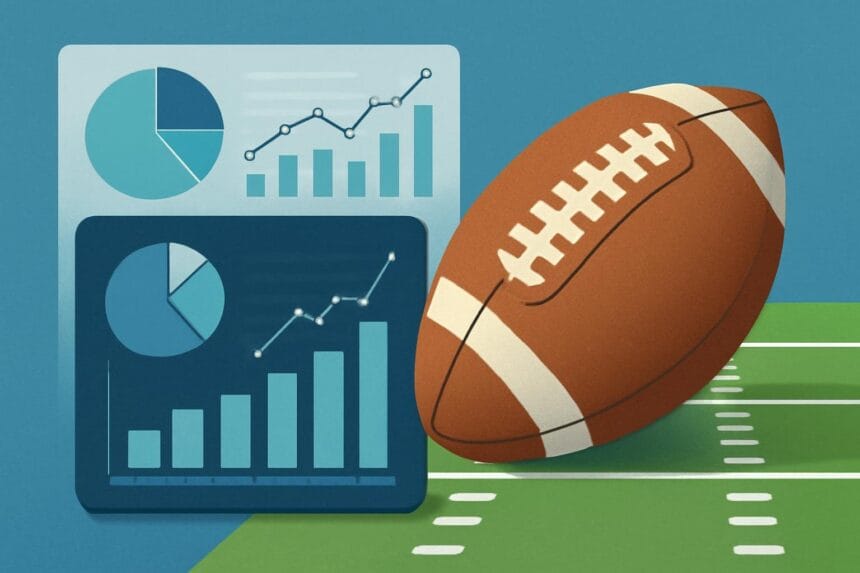
Illustrative image generated with OpenAI gpt-image-1.
SHARE

Saints fans are sad. Everyone is pondering Tim Tebow’s 2012 fate after he defied the odds of making it to the playoffs. The Packers and Aaron Rogers did not make it to back-to-back Super Bowls.

Tom Brady is obviously a machine, but his 55.9 completion percentage against the Ravens in five career games is his lowest against any other team, writes Jeff Reynolds of The Sports Xchange in a USA Today article. Will this matter this weekend?

Eli Manning’s elite standing as a quarterback is still making waves in the sports gossip circles. San Francisco’s offense, led by quarterback Alex Smith, got hot in the postseason. The Giant’s defense also came alive.

As we move into the conference championships, we can note that the statistics may be used to determine polls, odds and the Pro Bowl contenders, but they can’t always predict the games. Especially in the playoffs.

More Read

9 Amazing Ways Big Data Is Used Today to Change the World
6 Steps to Use Big Data to Improve Conversion Rates
5 Tips for Protecting Your Data Assets More Effectively
Text Analytics News Interview and Contest
Understanding Google Analytics: Making the Most Out of GA for Best Results

Before we move into more of the data analytics of the NFL playoffs, I have to issue a little disclosure and give you a fun stat about this NFL postseason.

I went to college with New York Giants quarterback Eli Manning (we weren’t close friends, but we did graduate at the same time). Now for the fun stat. Manning and four other former University of Mississippi players are starters on the four teams playing in this weekend’s conference championships. Six other colleges nationwide can also claim between three and five players on each of the championship teams. Now, on to why this postseason is an anomaly in more ways than one.

Do Stats Really Matter in the NFL Outcomes?

According to Sam Farmer, a sports writer for the Los Angeles Times, this year is different because stats don’t tell the whole story. He writes: “In an unusual twist, these playoffs follow a noteworthy pattern: Most of the NFC participants have top offenses; most of the AFC teams are more defense-minded.”

And he says this year’s Super Bowl may give us the answer to the burning question: “What’s better – a great offense or defense?”

Jeff MacGregor, a senior writer for ESPN.com, made a good point this past week: “If stats, science, and analysts really predicted the outcome, would we watch?” His piece centered on quarterbacks and the fact that no one who  predicted the “Year of the Quarterback” would have Eli Manning beating Aaron Rodgers.

He brings us back to an observation we’ve made before on the Spotfire blog – the human element. Without that, analytics can’t tell the whole story. And would we really want them to? To this point, MacGregor writes:

“The propositional knowledge of 21st century football is now so incredibly complex it’s impossible to predict the outcome of any single game using only statistics. The numbers just don’t mean much. Too many people and too much rage and too much chaos to account for. The sample size is too small and the stage is too big and the ball is too pointed and too much depends upon momentum and bad chance.”

This begs the question – should we just leave the analytics to our fantasy football teams?

The Business of America’s Obsession with Football

While this postseason shows how hard it is to predict game outcomes and who will make it to the final game, no one can deny the impact of the game on the economy. This infographic from IBM shows the data analytics of the impact a lack of the 2012 season would have had if there had been a NFL lockout in 2011.

Next Steps: Tweet us your predictions for the conference champions this weekend.

Amanda Brandon
Spotfire Blogging Team
Share This Article
Facebook Pinterest LinkedIn
Share

Follow us on Facebook

Latest News

Flat editorial illustration: The article's core relationship is the brand protection response workflow: detection of a phishing o
Data & AI Architecture Focus: 6 Best Brand Protection Tools for Phishing and Impersonation
IT Security
Server racks with cloud and user interface panels
Cloud Infrastructure and Workload Migration: A Data-Driven Look at VMware Alternatives in Europe
Cloud Computing Exclusive
Synthetic Data vs Real Web Data: Comparison, Limitations, and Collection Methods  -- AI-generated illustration
Synthetic Data vs Real Web Data: Comparison, Limitations, and Collection Methods 
Big Data Exclusive
Illustration of mobile analytics dashboards with ad performance charts connected to backend databases
11 Best Sisense Alternatives for Embedded Analytics
Business Intelligence Exclusive

Stay Connected

1.2KFollowersLike
33.7KFollowersFollow
222FollowersPin

You Might also Like

Data Quality and the Cupertino Effect
Data Quality

Data Quality and the Cupertino Effect

7 Min Read
Spectral Clustering Can Be A Game Changer—Here's How
AnalyticsModeling

Spectral Clustering Can Be A Game Changer—Here’s How

5 Min Read
Analytics: Frequency Distribution & Bell Curves
Predictive Analytics

Analytics: Frequency Distribution & Bell Curves

4 Min Read
Data Visualization: Accelerating the Decision Management Process
Data VisualizationPredictive Analytics

Data Visualization: Accelerating the Decision Management Process

0 Min Read

SmartData Collective is one of the largest & trusted community covering technical content about Big Data, BI, Cloud, Analytics, Artificial Intelligence, IoT & more.

AI chatbots
AI Chatbots Can Help Retailers Convert Live Broadcast Viewers into Sales!
Chatbots
5 Great Tips for Using Data Analytics for Website UX
Big Data

Quick Link

  • About
  • Contact
  • Privacy
Follow US
© 2008-26 SmartData Collective. All Rights Reserved.
Welcome Back!

Sign in to your account

Username or Email Address
Password

Lost your password?