We use cookies, including third-party cookies from Google to serve personalized ads through AdSense, to operate this site and understand how it is used. By continuing to browse, you accept this use. See our Privacy Policy and Terms of Use for details, including how to opt out of personalized advertising.
Accept
SmartData CollectiveSmartData Collective
  • Analytics
    AnalyticsShow More
    What Kind of Problem-Solving Distinguishes Data Analysts From Software Engineers -- AI-generated illustration
    What Kind of Problem-Solving Distinguishes Data Analysts From Software Engineers
    7 Min Read
    chatgpt image jul 21, 2026, 04 34 30 pm
    4 Core Benefits of Predictive Maintenance after Vibration Analysis
    10 Min Read
    How Does Data Mining Boost Customer Satisfaction in Logistics? Harnessing Analytics for Results -- AI-generated illustration
    How Does Data Mining Boost Customer Satisfaction in Logistics? Harnessing Analytics for Results
    11 Min Read
    chatgpt image jul 13, 2026, 04 23 45 pm
    How Data Analytics Helps Companies Improve User Engagement
    19 Min Read
    chatgpt image jul 13, 2026, 03 59 46 pm
    How Data Analytics Improves Multi-Location Search Strategies
    10 Min Read
  • Big Data
  • BI
  • Exclusive
  • IT
  • Marketing
  • Software
Search
© 2008-25 SmartData Collective. All Rights Reserved.
Reading: Behind Latest Systems Integration Boom: Cloud, Virtualization and Government
Share
Notification
Font ResizerAa
SmartData CollectiveSmartData Collective
Font ResizerAa
Search
  • About
  • Help
  • Privacy
Follow US
© 2008-23 SmartData Collective. All Rights Reserved.
SmartData Collective > IT > Cloud Computing > Behind Latest Systems Integration Boom: Cloud, Virtualization and Government
Cloud ComputingPolicy and Governance

Behind Latest Systems Integration Boom: Cloud, Virtualization and Government

JoeMcKendrick
JoeMcKendrick
4 Min Read
Behind Latest Systems Integration Boom: Cloud, Virtualization and Government
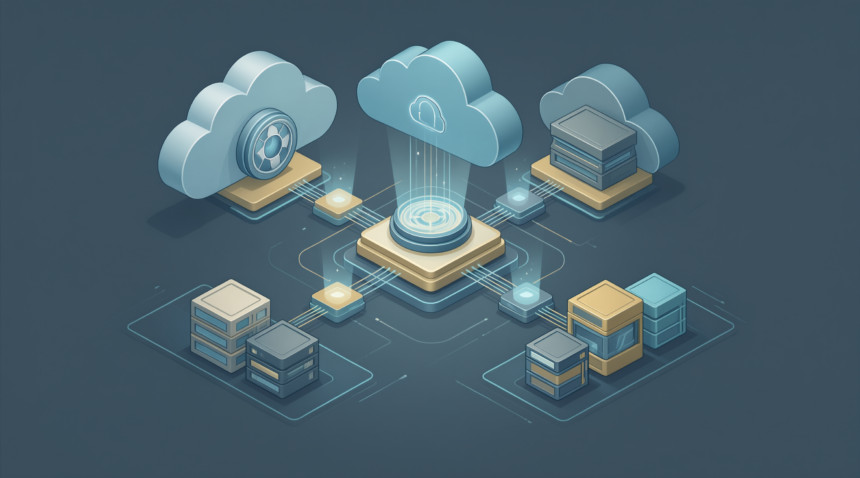
Illustration generated with Qwen Image.
SHARE

The cloud is disrupting the systems integration market big time, a new study confirms. Will the systems integration industry as we know it look very different in a few years, as companies seek applications and services in bite-sized chunks off the cloud, versus big-budget engagements?

The report from Global Industry Analysts observes that “growing awareness among business partners, and severe competition in the market are compelling companies to provide customers, employees and other business partners with on-demand services and information sourced from different data resources.”

The GIA report says this phenomenon is actually driving increased demand for integration solutions and services — preferably in easily accessible and flexible ways. Overall, the systems integration market — which includes enterprise software and services — is projected to grow at a clip of about 5.15% annually for the period 2009 through 2017. A majority of activity will be in application development, the report adds.

Private cloud and data center consolidation is another big area. “Growing momentum towards virtualization as a means for consolidation of IT resources has and will continue to generate considerable opportunities for systems integration,” the report notes. “Consolidation of servers, desktops, storage, applications and data as a part of this strategy will therefore drive up opportunities for IT systems integration and consulting services.”

Most of the market action is in North America, the study’s authors state: “The US continues to remain the largest regional market for systems integration accounting for a majority share in the global market revenue. Initiatives at the federal government level to rein in its $80-billion annual IT budget and run smarter will be a huge factor in systems integration market growth:

“Systems integration services are also forecast to grow in the public sector encouraged largely by government investments in upgrading IT infrastructure. Implementation of enterprise resource planning (ERP) systems in government agencies, introduction of public convenience and safety solutions, such as E-governance, and modernization programs, such as those initiated by the US Department of Health and Human Services (DHHS), will especially boost demand for systems integration over the next few years.

“Collection, storage and sharing of critical information among different governing agencies demand greater degree of data security to serve as a precautionary measure against terrorist attacks. In particular, collaborative data sharing, horizontal integration and safeguarding assets and infrastructure from external risks are high priority projects. In addition, energy and environment, and public healthcare will further drive growth in the IT professional services sector including development and integration services. Government initiatives in countries including Japan, Australia, and European Union region will also provide impetus to the growth in the international market.”

Major players in the marketplace identified by GIA include Accenture Plc., Atos SA, BT Global Services Ltd., CapGemini Group, Computer Sciences Corporation (CSC), Fujitsu Limited, Hewlett-Packard Company, Hitachi Ltd., IBM Corporation, Indra Sistemas S.A., Infosys Ltd., Lockheed Martin Corporation, LogicaCMG plc, NEC Corporation, Northrop Grumman Corporation, Oracle Corporation, SAP AG, Science Applications International Corporation, Tata Consultancy Services Limited, T-Systems Limited, and Wipro Limited.

(Photo: Wikipedia.)

Share This Article
Facebook Pinterest LinkedIn
Share

Follow us on Facebook

Latest News

Flat editorial illustration: The article explains that training robots for physical interaction requires three distinct data cate
Physical AI: What Data Do You Need to Train a Robot?
Artificial Intelligence Exclusive Robotics
What Kind of Problem-Solving Distinguishes Data Analysts From Software Engineers -- AI-generated illustration
What Kind of Problem-Solving Distinguishes Data Analysts From Software Engineers
Analytics Big Data Exclusive Software
Flat editorial illustration: The article examines AI agents that escalate from legitimate data retrieval to attempted intrusions
OpenAI’s Government Website Incidents Raise a Hard Question for AI Agents: When Should They Stop?
Artificial Intelligence News Security
Flat editorial illustration: The article's core relationship is the alignment between customer behavioral data (visit frequency,
Data-Driven Loyalty: How Restaurants Use Behavioral Analytics to Optimize Revenue
Exclusive

Stay Connected

1.2KFollowersLike
33.7KFollowersFollow
222FollowersPin

You Might also Like

Sales Pipeline Management Dos and Don'ts
Best PracticesBig DataCloud ComputingCRMData VisualizationExclusiveITSoftware

Sales Pipeline Management Dos and Don’ts

4 Min Read
Not Only SQL, Not Only Big Data
Business IntelligenceCommentaryData QualityKnowledge ManagementPolicy and Governance

Not Only SQL, Not Only Big Data

6 Min Read
BI Training – An Important Factor at All Company Levels
Business IntelligenceCloud Computing

BI Training – An Important Factor at All Company Levels

0 Min Read
Practice Fusion's Partnership with Merck Shows the Future of Medical Data
AnalyticsBig DataCloud ComputingData MiningData VisualizationExclusive

Practice Fusion’s Partnership with Merck Shows the Future of Medical Data

4 Min Read

SmartData Collective is one of the largest & trusted community covering technical content about Big Data, BI, Cloud, Analytics, Artificial Intelligence, IoT & more.

Chatbots and SEO: How Can Chatbots Improve Your SEO Ranking?
Artificial Intelligence Chatbots Exclusive
How To Get An Award Winning Giveaway Bot
Big Data Chatbots Exclusive

Quick Link

  • About
  • Contact
  • Privacy
Follow US
© 2008-26 SmartData Collective. All Rights Reserved.
Welcome Back!

Sign in to your account

Username or Email Address
Password

Lost your password?