Artificial intelligence has become a very large part of the business and car industries. It is now time for AI to become ingrained in InfoSec, or Information Security industry. Some people have reservations about AI becoming an integral part of the Information Security industry. Combined with converged systems and other technological tricks, artificial intelligence can actually be more helpful than what conventional wisdom may believe.
At present, the main purpose of Artificial Intelligence is to build machines that are able to perform tasks normally completed by humans. Artificial intelligence is quickly becoming able to protect business and homeowners from hackers and to detect new attacks, update security systems more efficiently, create virtual analysts, and share threat patterns.
Detect New Attacks
A group of scientists at MIT have created a security system, using artificial intelligence, that is able to defend against virtually all threats to privacy and security. In testing they realized that their new system is able to discover 85 percent of cyber-attacks before they can cause any damage.
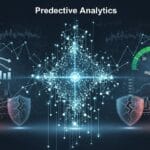
When users combine artificial intelligence with InfoSec, the computer is able to detect new attacks before they happen. Artificial intelligence allows the contextual modeler to continuingly update and make changes when necessary. An alert will be generated if it is discovered that a new set of behaviors seem similar to the set of abstract variables. Artificial intelligence can detect new attacks in all forms that they can be received such as a different communication interval, new file size, or the amount of data that is sent and received.
Update Security Systems Faster
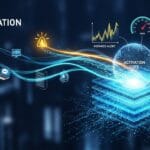
A goal for artificial intelligence is to be fast enough to catch attacks at an early stage before they cause damage to the source data. Attack strategies are always changing which means security systems need to adapt and keep up with the changing strategies. As businesses get bigger, owners need systems that continuously and automatically update. The faster the hackers, the faster the updates need to be. The standard process for updating security systems can be completed in six steps. These six steps include retrieve a “batch”, clean, train, validate, test, and deploy. It usually takes weeks, sometimes months, to get through the standard updating process.
If a new attack is found, it puts the business in jeopardy to be unprotected for weeks or even months. If the standard updating process is automated by adding artificial intelligence, it will allow for the process to be started automatically. As long as the process and the steps stay the same, artificial intelligence can help machines update faster.
Create Virtual Analysts
A good and successful analyst is a key resource for any type of security. The goal of software companies is to create a virtual analyst that is able to do the job and duties of a human analyst and allow a group of virtual analysts to be run by a single human analyst. With this being such a large goal, companies need to develop an advanced software that is able to program the virtual analysts.
The technology needs to accurately identify whether an activity is safe or a threat, similar to what a human analyst would do. Researchers have found that a team of virtual analysts with the insight and skill of a human analyst can increase the effectiveness of InfoSec.
Shared Threat Patterns
A company’s reaction strategy when a new threat is found has been spoonfed to employees for years. However, preventing a threat before it happens is a new skill that companies have just started to learn. One way to convert the company from reactive to proactive is by using shared threat patterns. This allows that when a threat is found by one business or company, another organization using the same network can automatically be prepared for the threat.
Although artificial intelligence may seem like a risky business tactic, it actually has the ability to help companies and owners excel in the business industry. Artificial intelligence is made up of software, patterns, protection tactics, programs to prevent and stop attacks, and security systems that continually are updated. Combining artificial intelligence with Infosec can protect a company at new levels from threats that a couple of years ago would have been almost impossible to prevent.