Cookies help us display personalized product recommendations and ensure you have great shopping experience.

By using this site, you agree to the Privacy Policy and Terms of Use.
Accept
SmartData CollectiveSmartData Collective
  • Analytics
    AnalyticsShow More
    warehouse accidents
    Data Analytics and the Future of Warehouse Safety
    10 Min Read
    stock investing and data analytics
    How Data Analytics Supports Smarter Stock Trading Strategies
    4 Min Read
    predictive analytics risk management
    How Predictive Analytics Is Redefining Risk Management Across Industries
    7 Min Read
    data analytics and gold trading
    Data Analytics and the New Era of Gold Trading
    9 Min Read
    composable analytics
    How Composable Analytics Unlocks Modular Agility for Data Teams
    9 Min Read
  • Big Data
  • BI
  • Exclusive
  • IT
  • Marketing
  • Software
Search
© 2008-25 SmartData Collective. All Rights Reserved.
Reading: Analytics Teams: Own The Business Problem, Not An Infrastructure
Share
Notification
Font ResizerAa
SmartData CollectiveSmartData Collective
Font ResizerAa
Search
  • About
  • Help
  • Privacy
Follow US
© 2008-23 SmartData Collective. All Rights Reserved.
SmartData Collective > Business Intelligence > Analytics Teams: Own The Business Problem, Not An Infrastructure
Business Intelligence

Analytics Teams: Own The Business Problem, Not An Infrastructure

Timo Elliott
Timo Elliott
3 Min Read
SHARE

can you help me with my analytics small

Analytics teams have devoted the last few decades building large and elaborate infrastructures that attempt to gather and harmonize essential business data.

can you help me with my analytics small

More Read

ai is improving the safety of cars
From Bolts to Bots: How AI Is Fortifying the Automotive Industry
AI is Driving Huge Changes in Omnichannel Marketing
The Importance of Business Intelligence in Organizations
Local Vodka in Newburyport: Why Not?
Forrester: Companies That Don’t Integrate Social Data Fail in the Age of the Customer

Analytics teams have devoted the last few decades building large and elaborate infrastructures that attempt to gather and harmonize essential business data.

These systems are critically important to business. Yet a Forrester study found that 32% of business people felt their enterprise BI applications were too cumbersome to use, 31% have to wait days or weeks for an average BI request, and 45% said the systems didn’t contain the data they needed.

Data availability has exploded. The study found that on average, 45% of the data business people use now resides outside of the enterprise BI environments. The result is that approximately 63% of business decision-makers are using an equal amount or more of homegrown versus enterprise BI applications. And an astonishingly minuscule 2% of business decision-makers reported using solely enterprise BI applications.

The impact of this is clear: to succeed in the future, analytics teams have to own the business problem, not an infrastructure. They have to be focused on helping business people access information — wherever it is stored — and make better decisions, not just concentrate on building the perfect data warehouse or data lake.

When a business person has a problem, the answer can’t be “sorry, that data is not in the data warehouse — you’re on your own / come back in six months / you’ll have to pay us to include it”.

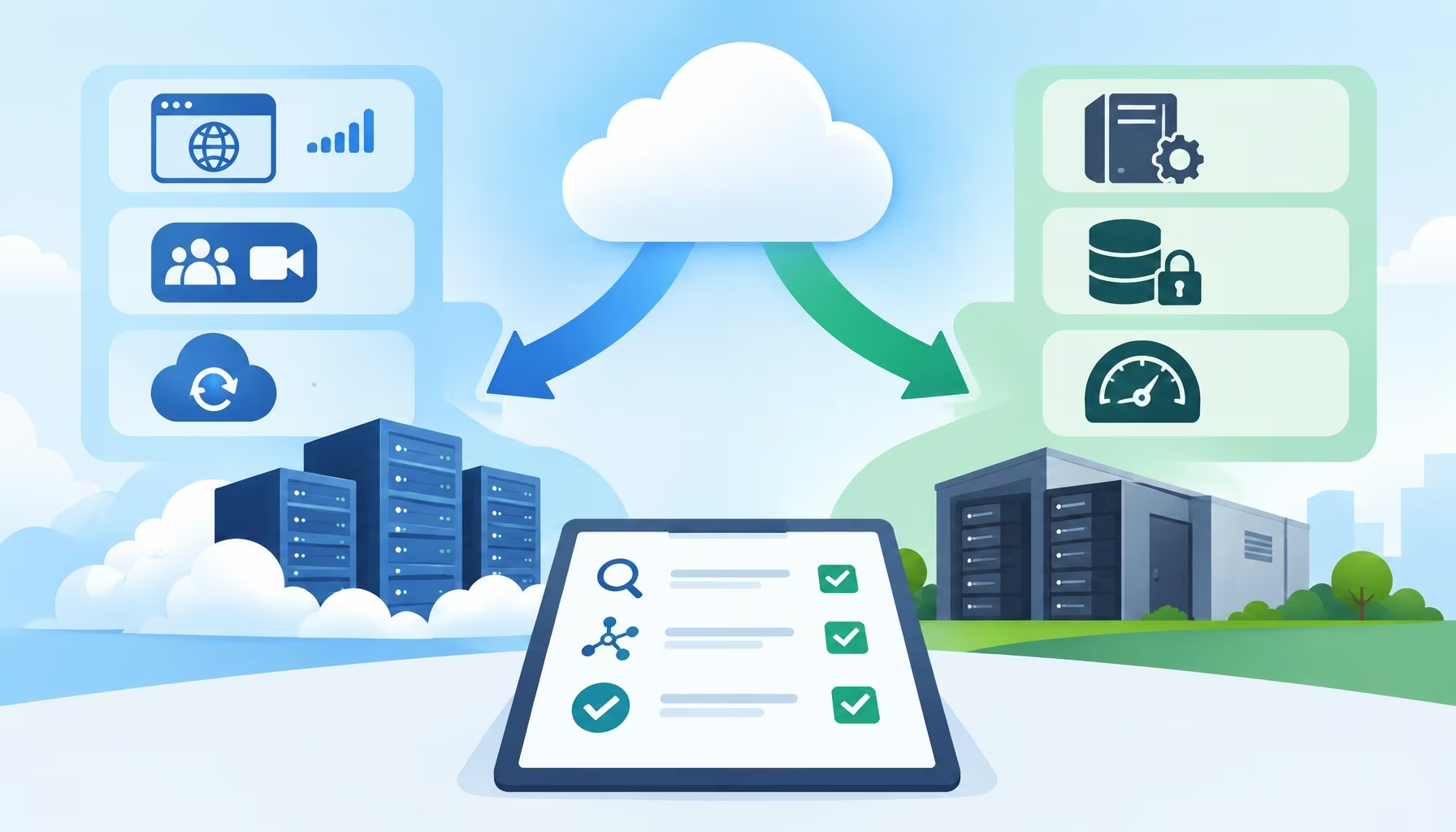
Whether the solution involves manual input of data into Excel, obtaining third-party data feeds, or spinning up a cloud-based Hadoop cluster, the analytics team should be the central point of contact for all discussions.

This may require a reorganization and some extra resources. But there are some big benefits. Today, many IT organizations believe they have strong governance rules in place, but this is constantly being undermined by business users dumping data to Excel. Business teams around the organization are already spending lots of time manually gathering and combining data. By centralizing these processes and being more pragmatic, organizations can save money, increase effective governance, improve the relationship between IT and business, and align data use more effectively with the real business needs of the organization.

Share This Article
Facebook Pinterest LinkedIn
Share

Follow us on Facebook

Latest News

warehouse accidents
Data Analytics and the Future of Warehouse Safety
Analytics Commentary Exclusive
stock investing and data analytics
How Data Analytics Supports Smarter Stock Trading Strategies
Analytics Exclusive
qr codes for data-driven marketing
Role of QR Codes in Data-Driven Marketing
Big Data Exclusive
microsoft 365 data migration
Why Data-Driven Businesses Consider Microsoft 365 Migration
Big Data Exclusive

Stay Connected

1.2KFollowersLike
33.7KFollowersFollow
222FollowersPin

You Might also Like

My “all-time” most-read 5 articles

4 Min Read
Image
Big DataBusiness Intelligence

What Are the Questions to Ask When Developing a Big Data Strategy?

7 Min Read

Use of Technology – My thought process on this one is a bit left field I know but… Part2

4 Min Read

Business Intelligence/Data Warehousing Emerging Trends (but not breakouts): 9 for ’09

3 Min Read

SmartData Collective is one of the largest & trusted community covering technical content about Big Data, BI, Cloud, Analytics, Artificial Intelligence, IoT & more.

giveaway chatbots
How To Get An Award Winning Giveaway Bot
Big Data Chatbots Exclusive
ai chatbot
The Art of Conversation: Enhancing Chatbots with Advanced AI Prompts
Chatbots

Quick Link

  • About
  • Contact
  • Privacy
Follow US
© 2008-25 SmartData Collective. All Rights Reserved.
Go to mobile version
Welcome Back!

Sign in to your account

Username or Email Address
Password

Lost your password?