Cookies help us display personalized product recommendations and ensure you have great shopping experience.

By using this site, you agree to the Privacy Policy and Terms of Use.
Accept
SmartData CollectiveSmartData Collective
  • Analytics
    AnalyticsShow More
    media monitoring
    Signals In The Noise: Using Media Monitoring To Manage Negative Publicity
    5 Min Read
    data analytics
    How Data Analytics Can Help You Construct A Financial Weather Map
    4 Min Read
    financial analytics
    Financial Analytics Shows The Hidden Cost Of Not Switching Systems
    4 Min Read
    warehouse accidents
    Data Analytics and the Future of Warehouse Safety
    10 Min Read
    stock investing and data analytics
    How Data Analytics Supports Smarter Stock Trading Strategies
    4 Min Read
  • Big Data
  • BI
  • Exclusive
  • IT
  • Marketing
  • Software
Search
© 2008-25 SmartData Collective. All Rights Reserved.
Reading: More on the Task Delegation Process
Share
Notification
Font ResizerAa
SmartData CollectiveSmartData Collective
Font ResizerAa
Search
  • About
  • Help
  • Privacy
Follow US
© 2008-23 SmartData Collective. All Rights Reserved.
SmartData Collective > Uncategorized > More on the Task Delegation Process
Uncategorized

More on the Task Delegation Process

Editor SDC
Editor SDC
5 Min Read
SHARE

Yesterday, I introduced the task delegation process as one of the process patterns I found particularly interesting. It turns out that I am not the only one, and a Dogfood team has been formed around it, with Robert (Vice President of Business Development) and Madhav (Sales Engineer). For them to be successful, they’ll need some more detailed requirements, which I am happy to provide today.

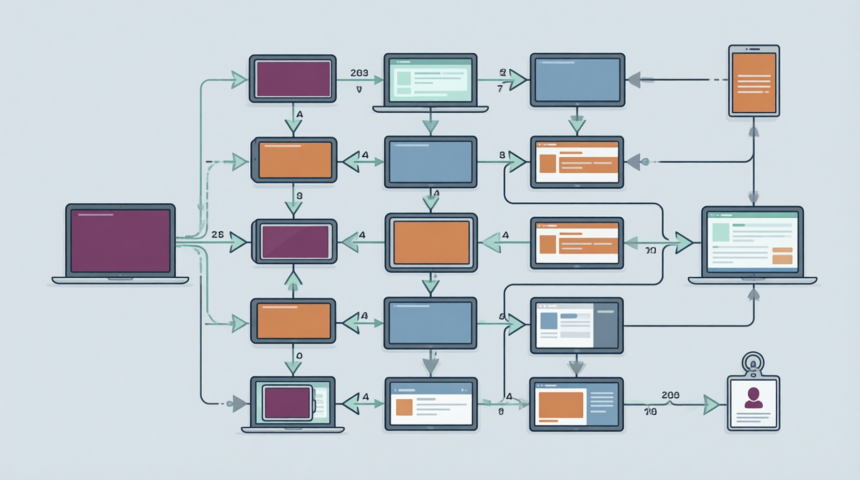
The scenario is pretty simple: a task is assigned by one user (Task Owner) to one or more users (Task Delegates). When the task is assigned by the Owner, each Delegate receives notification about it, and is presented with two options, Completed or Deny. The task is considered completed once all Delegates have either completed or denied it. When more than one Delegates are presented with the task, the participation of every Delegates is expected, which means that the work supposed to be performed by a Delegate who would deny the task will have to be performed by someone else. Should a task be denied by a Delegate in such a fashion, it would then be the responsibility of the Task Owner to assign a new task to someone else.

In a first implementation, the task delegation process should provide a …

More Read

Defining the Customer – Brandwagon
Can Cloud IP Address Be Damaged Goods?
Enterprise Software: The Next Acquisition Wave
Marketing Lessons Learned From Micro-Finance In India
Email and…

Yesterday, I introduced the task delegation process as one of the process patterns I found particularly interesting. It turns out that I am not the only one, and a Dogfood team has been formed around it, with Robert (Vice President of Business Development) and Madhav (Sales Engineer). For them to be successful, they’ll need some more detailed requirements, which I am happy to provide today.

The scenario is pretty simple: a task is assigned by one user (Task Owner) to one or more users (Task Delegates). When the task is assigned by the Owner, each Delegate receives notification about it, and is presented with two options, Completed or Deny. The task is considered completed once all Delegates have either completed or denied it. When more than one Delegates are presented with the task, the participation of every Delegates is expected, which means that the work supposed to be performed by a Delegate who would deny the task will have to be performed by someone else. Should a task be denied by a Delegate in such a fashion, it would then be the responsibility of the Task Owner to assign a new task to someone else.

In a first implementation, the task delegation process should provide a REST interface for creating, completing, and denying tasks. It should also provide an email interface (SMTP) for creating tasks (as described in the original article), and another email interface for completing or denying tasks. Also, the process should limit the number of Task Delegates to a fairly low figure (5 or 10), in order to prevent its use for spamming purposes, especially if it is to be deployed on the public Internet and offered for registration-free usage, as originally suggested.

The interfaces for task creation (both REST and SMTP) should support the setting of a due date for the task. By default, the process should send daily reminders to Delegates until they either complete or deny the task.

Finally, the entire process should be implemented in such a way that SMTP interfaces (both inbound and outbound) are bound to the REST interfaces, making it easier to add new ones over time. Examples of such interfaces could be a plug-in for Microsoft Outlook, an extension to Singleshot (which was recently released under AGPL v3.0), or an integration with Salesforce.com.

Here we are. Good luck to Robert and Madhav for this really cool project!

Link to original post

Share This Article
Facebook Pinterest LinkedIn
Share

Follow us on Facebook

Latest News

cloud dataops for metering
Taming the IoT Firehose: How Utilities Are Scaling Cloud DataOps for Smart Metering
Cloud Computing Exclusive Internet of Things IT
ai in video game development
Machine Learning Is Changing iGaming Software Development
Exclusive Machine Learning News
media monitoring
Signals In The Noise: Using Media Monitoring To Manage Negative Publicity
Analytics Exclusive Infographic
data=driven approach
Turning Dead Zones Into Data-Driven Opportunities In Retail Spaces
Big Data Exclusive Infographic

Stay Connected

1.2KFollowersLike
33.7KFollowersFollow
222FollowersPin

You Might also Like

The Synergy of Rules and Predictive Analytics

3 Min Read

Characteristics of a Social Media Strategist

5 Min Read

Implementing Enterprise 2.0 at Océ, Part One: Business Drivers

7 Min Read

Anatomy of a bad search result

4 Min Read

SmartData Collective is one of the largest & trusted community covering technical content about Big Data, BI, Cloud, Analytics, Artificial Intelligence, IoT & more.

AI and chatbots
Chatbots and SEO: How Can Chatbots Improve Your SEO Ranking?
Artificial Intelligence Chatbots Exclusive
ai is improving the safety of cars
From Bolts to Bots: How AI Is Fortifying the Automotive Industry
Artificial Intelligence

Quick Link

  • About
  • Contact
  • Privacy
Follow US
© 2008-25 SmartData Collective. All Rights Reserved.
Welcome Back!

Sign in to your account

Username or Email Address
Password

Lost your password?