We use cookies, including third-party cookies from Google to serve personalized ads through AdSense, to operate this site and understand how it is used. By continuing to browse, you accept this use. See our Privacy Policy and Terms of Use for details, including how to opt out of personalized advertising.
Accept
SmartData CollectiveSmartData Collective
  • Analytics
    AnalyticsShow More
    chatgpt image jul 21, 2026, 04 34 30 pm
    4 Core Benefits of Predictive Maintenance after Vibration Analysis
    10 Min Read
    How Does Data Mining Boost Customer Satisfaction in Logistics? Harnessing Analytics for Results -- AI-generated illustration
    How Does Data Mining Boost Customer Satisfaction in Logistics? Harnessing Analytics for Results
    11 Min Read
    chatgpt image jul 13, 2026, 04 23 45 pm
    How Data Analytics Helps Companies Improve User Engagement
    19 Min Read
    chatgpt image jul 13, 2026, 03 59 46 pm
    How Data Analytics Improves Multi-Location Search Strategies
    10 Min Read
    cybersecurity efforts
    How Behavioral Analytics and AI Are Redefining Cybersecurity for Boca Raton Businesses
    14 Min Read
  • Big Data
  • BI
  • Exclusive
  • IT
  • Marketing
  • Software
Search
© 2008-25 SmartData Collective. All Rights Reserved.
Reading: SSD and DB usage
Share
Notification
Font ResizerAa
SmartData CollectiveSmartData Collective
Font ResizerAa
Search
  • About
  • Help
  • Privacy
Follow US
© 2008-23 SmartData Collective. All Rights Reserved.
SmartData Collective > Big Data > Data Mining > SSD and DB usage
Business IntelligenceData MiningData WarehousingPredictive Analytics

SSD and DB usage

TonyBain
TonyBain
4 Min Read
SSD and DB usage
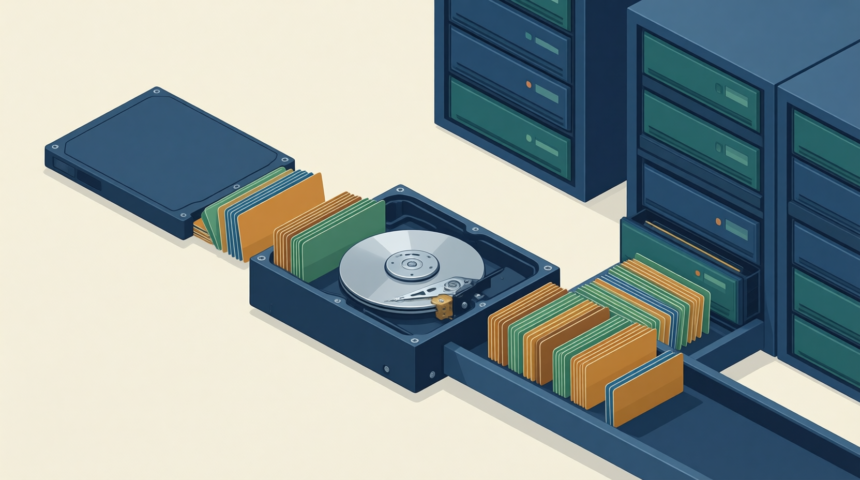
Illustration generated with Qwen Image.
SHARE

Image via Wikipedia

Recently I have seen several articles about Solid State Drives (SSD) and some articles are picking 2009 to be the year of the SSD.  While I agree SSD’s will bring some great benefits in the years to come, I wanted to clarify the current state of SSD’s in relation to usage in the database field.  A primary misconception is that because SSD’s are a type of “memory chip” storage that they are super fast, like system RAM and using them to house a database will make the database super fast.  SSD’s are very different from system RAM because of course their data must be persisted and this requirement carries a major performance impact. 

SSD’s offer high read performance benefits over current mechanical (magnetic) HDD’s.  As much as 20x’s as fast.  However write performance on SSD’s is slower than current HDD’s, in fact HDD’s can be up to 10x as fast to carry out random writes when compared to SSD’s.  This is due to a number of limitations involved in writing to persisted solid state memory, including the fact the SSD sectors cannot be overwritten but instead the whole sector has to be erased and rewritten. 

The benchmarks available are a problem and it is difficult to get clear results.  This is for a few reasons.  Firstly, because both the SSD and HDD are two technologies undergoing rapid evolution any benchmark published quickly becomes out of date and irrelevant.  Secondly the benchmarks are often published by advocates of either technology rather than completely independent bodies.  Some benchmarks I have seen are showing the speeds of high end SSD’s compared with low end HDD’s and vice versa.

More Read

Online survey research – how accurate?
AI Tools Are Strengthening Global Supply Chains
Gliding through Traffic with Big Data
Can Big Data Analytics Solve “Too Big to Fail” Banking Complexity?
CRM Database: Unlocking Customer Secrets for Business Growth

So when considering SSD use for improving Database performance, make sure you consider the following points. 

  • SSD’s generally have better read performance than HDD. But make sure you are purchasing current SSD technology as you may find older SSDs have slower read performance than current HDDs.

  • SSD’s generally have worse write performance than current HDDs.  If you have a write heavy workload and your silver bullet is SSD you may be disappointed.  There are exceptions but ensure you are comparing current with current.

  • If you are able to split data based on usage patterns such as partitioning or file placement, moving highly read, low write data to SSD storage can provide significant performance improvement.

Some proponents are picking that before we see pure SSD storage replace existing HDD’s we will see the emergence of hybrid devices that contain SSD and HDD technologies.  These devices will have hardware algorithms that make a determination about where a particular sector should site based on its usage profile.  Highly read low write sectors would sit on SSD and highly written sectors on HDD, of course all of this transparent to the system using such a disk.  If such a hybrid device actually becomes mainstream or is skipped altogether due to rapid advancement of SSD is still to be seen.

Related articles by Zemanta
  • Intel, Hitachi to develop solid-state drives
  • SanDisk cranks up solid-state drive speed
  • Solid-state drives: No rush to widespread success

Link to original postInnovations in information management

Share This Article
Facebook Pinterest LinkedIn
Share

Follow us on Facebook

Latest News

Flat editorial illustration: The article's core relationship is the alignment between customer behavioral data (visit frequency,
Data-Driven Loyalty: How Restaurants Use Behavioral Analytics to Optimize Revenue
Exclusive
Flat editorial illustration: The article's core relationship is that reliable eCommerce attribution depends on a unified, well-st
How eCommerce Data Teams Can Build Attribution That Holds Up
Big Data Exclusive
Flat editorial illustration: The article's core relationship is the contrast between fragmented inherited data infrastructure (wh
Data Stack Consolidation as a Data Quality and Governance Strategy for Mid-Market Teams
Big Data Exclusive
Emergency responder and nurse reviewing tablet with data dashboards
Evaluating Workforce Assessment Tools: Looking Beneath the Dashboard at Psychometric Data
Exclusive Software

Stay Connected

1.2KFollowersLike
33.7KFollowersFollow
222FollowersPin

You Might also Like

The CEO Wants Analytics! Now What?
AnalyticsBest PracticesData MiningExclusivePredictive AnalyticsStatistics

The CEO Wants Analytics! Now What?

6 Min Read
NoSQL Vs. RDBMS for Interactive Analytics: Leveraging the Right and Left Brain of Data
AnalyticsBig DataBusiness IntelligenceCloud ComputingData ManagementData MiningData WarehousingExclusiveHadoopPredictive AnalyticsR Programming LanguageSQLUnstructured DataWeb Analytics

NoSQL Vs. RDBMS for Interactive Analytics: Leveraging the Right and Left Brain of Data

9 Min Read
Workforce Planning and HR Analytics
Data MiningData VisualizationDecision ManagementKnowledge ManagementRisk ManagementWorkforce AnalyticsWorkforce Data

Workforce Planning and HR Analytics

5 Min Read
Oracle Brings Enhancements to Business Intelligence
AnalyticsBig DataBusiness IntelligenceCollaborative DataData ManagementNew ProductsSoftware

Oracle Brings Enhancements to Business Intelligence

12 Min Read

SmartData Collective is one of the largest & trusted community covering technical content about Big Data, BI, Cloud, Analytics, Artificial Intelligence, IoT & more.

5 Great Tips for Using Data Analytics for Website UX
Big Data
ai chatbot
How AI Website Chatbots Improve Customer Support and Lead Generation
Chatbots Exclusive

Quick Link

  • About
  • Contact
  • Privacy
Follow US
© 2008-26 SmartData Collective. All Rights Reserved.
Welcome Back!

Sign in to your account

Username or Email Address
Password

Lost your password?