We use cookies, including third-party cookies from Google to serve personalized ads through AdSense, to operate this site and understand how it is used. By continuing to browse, you accept this use. See our Privacy Policy and Terms of Use for details, including how to opt out of personalized advertising.
Accept
SmartData CollectiveSmartData Collective
  • Analytics
    AnalyticsShow More
    chatgpt image jul 21, 2026, 04 34 30 pm
    4 Core Benefits of Predictive Maintenance after Vibration Analysis
    10 Min Read
    How Does Data Mining Boost Customer Satisfaction in Logistics? Harnessing Analytics for Results -- AI-generated illustration
    How Does Data Mining Boost Customer Satisfaction in Logistics? Harnessing Analytics for Results
    11 Min Read
    chatgpt image jul 13, 2026, 04 23 45 pm
    How Data Analytics Helps Companies Improve User Engagement
    19 Min Read
    chatgpt image jul 13, 2026, 03 59 46 pm
    How Data Analytics Improves Multi-Location Search Strategies
    10 Min Read
    cybersecurity efforts
    How Behavioral Analytics and AI Are Redefining Cybersecurity for Boca Raton Businesses
    14 Min Read
  • Big Data
  • BI
  • Exclusive
  • IT
  • Marketing
  • Software
Search
© 2008-25 SmartData Collective. All Rights Reserved.
Reading: Keeping Singapore Green with Data and Design
Share
Notification
Font ResizerAa
SmartData CollectiveSmartData Collective
Font ResizerAa
Search
  • About
  • Help
  • Privacy
Follow US
© 2008-23 SmartData Collective. All Rights Reserved.
SmartData Collective > Data Management > Best Practices > Keeping Singapore Green with Data and Design
Best PracticesBig DataCollaborative DataCommentaryData VisualizationLocationModelingPredictive AnalyticsSentiment AnalyticsSocial Data

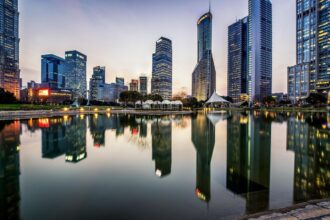
Keeping Singapore Green with Data and Design

zachpiester
zachpiester
5 Min Read
Keeping Singapore Green with Data and Design
Illustration generated with Qwen Image.
SHARE

This post is also available in: Chinese (Traditional) City Dwelling in Singapore It is not simply a matter of city planning in the traditional sense. The very rhythm of Singapore is based on a marvelously efficient data collection process, which feeds the continuous refinement of urban planning. The Singaporean approach to analytical design contains important lessons, as statistics from the United Nations suggest 70 percent of the world’s population will live in cities by 2050. This kind of growth will put immense pressure on urban infrastructures, many of which are already archaic and crumbling. The cultures of the Southeast Asian region have historically fueled many of the world’s innovations. Many of these advances are the result of the complex interactions between cultures and technology. As we move more deeply into the 21st century, the technology law of accelerating returns is more evident in Asia than in Europe or America. The rate of change in the way people live is increasing at an exponential rate each year in Asia. Against this backdrop of continuous change driven by data collection technology, Singapore has implemented restoration of green space with astounding results.

Contents
  • Singapore’s Green Data & Design
  • Proportionate Green Space Design
  • Measuring Biodiversity
  • Singapore Provides a Roadmap

Singapore’s Green Data & Design

Singapore’s commitment to sustainability is driven by innovative data and urban design, making it a model for eco-conscious cities. For businesses looking to align with these standards, details on running an audit ensures compliance with environmental and financial regulations. Firms can get expert guidance on performing an audit in Singapore to streamline processes while supporting the city’s green vision.

Proportionate Green Space Design

Since I first visited Singapore around 1994, the population has grown to slightly more than five million, almost double what it was in the early nineties. In that same period, the greenspace — as defined by parks, mini-gardens, and rooftop green gardens — has increased to nearly half of the surface space of the city. This astute use of data to drive the city’s greening is the analytical portion of 10-year development program managed by the country’s National Parks Board. Led by Mr. Lim Eng Hwee, the deputy chief executive for planning at the Urban Redevelopment Authority, the city has set aside close to 10 percent of the total land area in Singapore for parks and nature reserves, to correspond with future development and population growth.

Measuring Biodiversity

In another impressive display of art and data sensibility, Singapore pioneered the City Biodiversity Index, a statistical calculation used for optimizing the ratio of green space to buildings and population density. As a testament to the poetry of this analytical model, 28 other major cities around the world have adopted it. London was among the first to adopt the The City Biodiversity Index, which helped improve the impression of this oldest of Northern European cities as experienced by attendees of the 2012 Olympics. My travels to London this summer revealed a city with a renewed and quantifiable emphasis on livable urban space. During my journey from London to the beautiful town of Harpenden to visit the grounds of Ashridge, I realized how much of England had been originally designed to showcase natural green space. The staff at Ashridge have true appreciation for how green design transforms the very nature of work. It struck me that data-driven emphasis on greening inspired by Singapore’s Index simply returned London to its own long legacy of harmonious design.

More Read

How Big Data Technology Helped Fight The Pandemic
Will Tomorrow’s Healthcare Providers Need to Be Data Analysts?
Mobile BI Isn’t Only About Mobile
Leveraging Analytics to Improve Enterprise Performance Management
BI For Fun – Who Were the Dr Who Villains & What Were Their Motivations to End the World?

Singapore Provides a Roadmap

Statistical approaches to green space planning could be the future of quantifying proper land use, instead of political favors to developers that often end in inefficient, monstrous design. Instead of emphasizing metrics promoting square feet of office space, maybe the answer is to require developers to develop green space in correlation with office space built. It’s difficult to argue against this, given Singapore’s GDP per square foot of green space. By Roger Wood – Founder of the (ART+DATA) Institute in San Francisco, California Images via _foam, vil.sandi and ThisParticularGreg This article originally appeared on the sustainable cities website This Big City.


Share This Article
Facebook Pinterest LinkedIn
Share

Follow us on Facebook

Latest News

Managing Application Access When Corporate VPNs Reach Capacity Limits -- AI-generated illustration
Managing Application Access When Corporate VPNs Reach Capacity Limits
Exclusive IT Security
How Digital Knowledge Repositories Facilitate Self-Directed Research and Information Discovery -- AI-generated illustration
How Digital Knowledge Repositories Facilitate Self-Directed Research and Information Discovery
Exclusive News
7 MDR Providers Combining Offensive Security Testing With 24/7 Monitoring -- AI-generated illustration
7 MDR Providers Combining Offensive Security Testing With 24/7 Monitoring
Exclusive IT Security
The Information Governance Practices That High-Demand Social Work Roles Require -- AI-generated illustration
The Information Governance Practices That High-Demand Social Work Roles Require
Data Management Exclusive Policy and Governance Security

Stay Connected

1.2KFollowersLike
33.7KFollowersFollow
222FollowersPin

You Might also Like

Report Governance is Key to Consistent Business Information
Best PracticesBusiness Intelligence

Report Governance is Key to Consistent Business Information

5 Min Read
Reflections on Gate 24
Business IntelligenceData Warehousing

Reflections on Gate 24

7 Min Read
Will Gaming Platforms Adopt AI for Customer Risk Profiling?
Artificial IntelligenceBig Data

Will Gaming Platforms Adopt AI for Customer Risk Profiling?

5 Min Read
Business Intelligence 3.0 and Its Affect on the Future of Meetings
Business IntelligenceSocial Data

Business Intelligence 3.0 and Its Affect on the Future of Meetings

3 Min Read

SmartData Collective is one of the largest & trusted community covering technical content about Big Data, BI, Cloud, Analytics, Artificial Intelligence, IoT & more.

How To Get An Award Winning Giveaway Bot
Big Data Chatbots Exclusive
From Bolts to Bots: How AI Is Fortifying the Automotive Industry
Artificial Intelligence

Quick Link

  • About
  • Contact
  • Privacy
Follow US
© 2008-26 SmartData Collective. All Rights Reserved.
Welcome Back!

Sign in to your account

Username or Email Address
Password

Lost your password?