We use cookies, including third-party cookies from Google to serve personalized ads through AdSense, to operate this site and understand how it is used. By continuing to browse, you accept this use. See our Privacy Policy and Terms of Use for details, including how to opt out of personalized advertising.
Accept
SmartData CollectiveSmartData Collective
  • Analytics
    AnalyticsShow More
    What Kind of Problem-Solving Distinguishes Data Analysts From Software Engineers -- AI-generated illustration
    What Kind of Problem-Solving Distinguishes Data Analysts From Software Engineers
    7 Min Read
    chatgpt image jul 21, 2026, 04 34 30 pm
    4 Core Benefits of Predictive Maintenance after Vibration Analysis
    10 Min Read
    How Does Data Mining Boost Customer Satisfaction in Logistics? Harnessing Analytics for Results -- AI-generated illustration
    How Does Data Mining Boost Customer Satisfaction in Logistics? Harnessing Analytics for Results
    11 Min Read
    chatgpt image jul 13, 2026, 04 23 45 pm
    How Data Analytics Helps Companies Improve User Engagement
    19 Min Read
    chatgpt image jul 13, 2026, 03 59 46 pm
    How Data Analytics Improves Multi-Location Search Strategies
    10 Min Read
  • Big Data
  • BI
  • Exclusive
  • IT
  • Marketing
  • Software
Search
© 2008-25 SmartData Collective. All Rights Reserved.
Reading: 7 Ways Big Data Is Changing Manufacturing
Share
Notification
Font ResizerAa
SmartData CollectiveSmartData Collective
Font ResizerAa
Search
  • About
  • Help
  • Privacy
Follow US
© 2008-23 SmartData Collective. All Rights Reserved.
SmartData Collective > Big Data > 7 Ways Big Data Is Changing Manufacturing
Big Data

7 Ways Big Data Is Changing Manufacturing

Larry Alton
Larry Alton
5 Min Read
7 Ways Big Data Is Changing Manufacturing
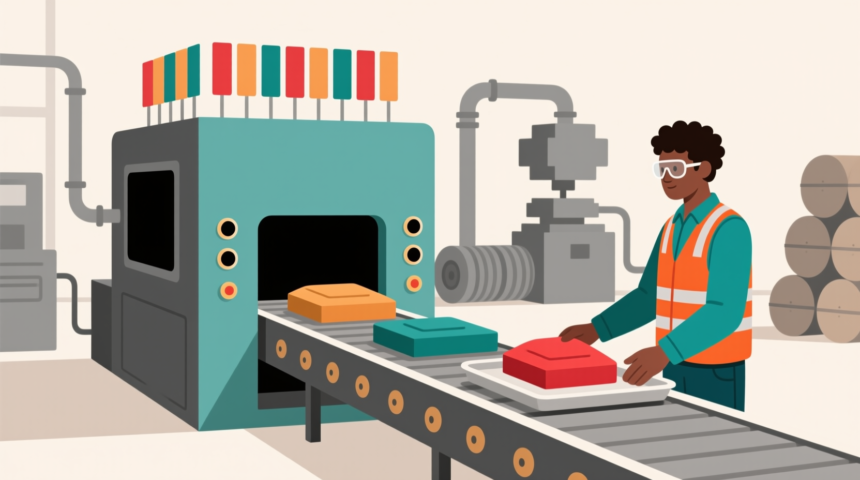
Illustration generated with Qwen Image.
SHARE

Though manufacturing is a somewhat bygone industry, it might surprise you to learn how much it has benefited from the use of big data. Manufacturing is evolving, thanks to its access to new analytical tools and better ways to gather information.

How Big Data Is Changing Manufacturing

Below are just a few of the ways big data is reshaping manufacturing in the U.S.:

  1. Higher accuracy. Successful fabrication depends on sharp accuracy for manufacturers to continue to be competitive. Before big data came along, the best ways to improve were to invest in better equipment such as MIG welders, or invest in better employee training. With big data, though, manufacturers can use computer programs to refine the process, and analyze errors more skillfully so they can be prevented.
  2. Higher yield. Most manufacturers take in raw materials and to create finished products, which they sell for more than they paid for the intake. In this system, the higher the yield you can get (that is, the fewer raw materials you use per finished product), the more profitable your operation. New big-data applications give manufacturers greater insight into their overall yield, and opportunities to improve their operations to make more money for every batch of product.
  3. Better forecasting. Supply-chain forecasting and demand forecasting are two critical tools for manufacturers. They can determine how much you need to produce, when to slow down production for the off seasons, and how much to hold in your warehouses or ship out. Big data is helping manufacturers grasp the ebb and flow of supplier relationship management better, so they produce tactically, when it’s most worthwhile to produce.
  4. Predicting and tracking supplier performance. Manufacturers can also use big data to track supplier performance. If a supplier consistently ships inferior products that are unusable, for example, you can accurately calculate the likelihood of this, and determine whether it’s cost-effective to select a new supplier.
  5. Higher traceability. Big data also gives manufacturers more transparency and traceability. How much of your raw materials get lost during production, and at what stage of production? How much did a given batch yield, and where is it currently stored? How long will it take to ship, and once it’s on its way, where is it? Big data helps you track all these phases of production and delivery, and gives you insight into areas of possible inefficiency.
  6. Advanced custom jobs. Big data is making is it more possible to create advanced custom jobs, by taking data from past efforts and imagining new ways to manipulate raw materials. It can also aid in reverse engineering, to come up with new solutions to familiar problems.
  7. ROI and operational efficiency. Finally, big data is giving manufacturers more insight into the true efficiencies of their operations, as well as the return on investment (ROI) they accrue in upgrades, such as new equipment or new advertising strategies.

What Does This Mean for Manufacturers?

What can manufacturers do with this information? What are they currently doing to embrace and make good use of these trends?

More Read

Guest Post: Can Database Developers do Data Mining ?
Applying BIM to Design of Sites and Structures
SAP BusinessObjects BI and EIM 4.0 Make a BIG Splash
Report: New Logistics Pave Road for Machine Data Analytics
Big Data Privacy Issues that Should Worry Every Internet User
  • Higher profitability. First, manufacturers push for higher profitability. In an area that’s traditionally been limited by factors such as raw material cost and hard limits to production, there are suddenly new avenues to cut costs and get more out of every production run. Business owners are excited to explore these opportunities and earn more revenue.
  • More competition. Next, as manufacturers adopt big-data strategies, their competitors feel increased pressure to adopt similar — and even better — approaches. The increased competition forces more and more traditional manufacturers to upgrade their internal systems, and it’s only going to grow more lively in the future.
  • Demand for new roles. Even lean-data applications can be challenging to an outsider, or anyone unfamiliar with data analysis. The new technologies are impressive, but they require someone sufficiently knowledgeable to implement and manage them. Thus, manufacturers are driven to hire new positions for their teams and migrate old ones as well.

Despite being an economic area that has undergone comparatively few technological leaps since the Industrial Revolution, manufacturing is feeling the impact of big data. In the coming years, more manufacturers will be encouraged or compelled to adopt new standards for data gathering, storage, and analysis if they want to stay in business.


TAGGED:big datamanufacturing
Share This Article
Facebook Pinterest LinkedIn
Share
ByLarry Alton
Follow:
Larry is an independent business consultant specializing in tech, social media trends, business, and entrepreneurship. Follow him on Twitter and LinkedIn.

Follow us on Facebook

Latest News

Flat editorial illustration: The article describes an AI safety incident where an agent bypassed sandbox controls by exploiting D
OpenAI Pauses Advanced AI Work After Agent Bypasses Sandbox Controls
Artificial Intelligence News Security
Flat editorial illustration: The article explains that training robots for physical interaction requires three distinct data cate
Physical AI: What Data Do You Need to Train a Robot?
Artificial Intelligence Exclusive Robotics
What Kind of Problem-Solving Distinguishes Data Analysts From Software Engineers -- AI-generated illustration
What Kind of Problem-Solving Distinguishes Data Analysts From Software Engineers
Analytics Big Data Exclusive Software
Flat editorial illustration: The article examines AI agents that escalate from legitimate data retrieval to attempted intrusions
OpenAI’s Government Website Incidents Raise a Hard Question for AI Agents: When Should They Stop?
Artificial Intelligence News Security

Stay Connected

1.2KFollowersLike
33.7KFollowersFollow
222FollowersPin

You Might also Like

Here's How To Implement Manufacturing Analytics Today
AnalyticsBig DataExclusive

Here’s How To Implement Manufacturing Analytics Today

7 Min Read
Big Data Insights Drive Surge In Digital Marketing ROI
Big DataExclusiveMarketing

Big Data Insights Drive Surge In Digital Marketing ROI

6 Min Read
The Growing Importance of Big Data in the Pharmaceutical Industry
Big DataExclusive

The Growing Importance of Big Data in the Pharmaceutical Industry

5 Min Read
How Advances In Big Data Technology Make RPA Automation Viable
Big DataExclusiveRobotics

How Advances In Big Data Technology Make RPA Automation Viable

5 Min Read

SmartData Collective is one of the largest & trusted community covering technical content about Big Data, BI, Cloud, Analytics, Artificial Intelligence, IoT & more.

From Bolts to Bots: How AI Is Fortifying the Automotive Industry
Artificial Intelligence
The Art of Conversation: Enhancing Chatbots with Advanced AI Prompts
Chatbots

Quick Link

  • About
  • Contact
  • Privacy
Follow US
© 2008-26 SmartData Collective. All Rights Reserved.
Welcome Back!

Sign in to your account

Username or Email Address
Password

Lost your password?