Politics are important and unavoidable. Many, if not most (sane) people find politics unpleasant, and struggle, often in vain, to avoid contact with the topic. As architects in large enterprises, politics makes up a non-trivial part of our jobs — no way for us to dodge that particular bullet. One of the classic works on systems architecture, The Art of Systems Architecting (Maier, Rechtin), devotes an entire chapter to the subject.
Let’s define “politics”. Wikipedia says:
Politics consists of “social relations involving authority or power”[1] and refers to the regulation of a political unit, [2] and to the methods and tactics used to formulate and apply policy.[3]
As we can see from this definition (and it’s references), politics is about power and decision making.
As I write this, I’m engaged in an interesting discussion, behind the firewall, with other architects in my organisation, about the skills, talents, mindset and knowledge needed to be an “architect”. We’re debating reading lists, soft skills, and talking about things like SWEBOK and equivalents.

It’s a good conversation, and I’m enjoying it. I hope that something will emerge out of it that will help us to improve how we develop and recruit architects in the future. It’s a very frank, open, and honest conversation, where we’re being candid about ourselves and our own weaknesses — IOW, the best kind of conversation there is. But that’s not the point of this post. This post was triggered by something that was said in the course of that conversation (which is being carried on via e-mail in a fairly small group) — “we should probably be doing this on the wiki”.
:-O
I had two immediate reactions to that. One was — “Yeah! Let’s do that! Great idea!” Here’s why: our conversation is a great depiction of experienced, talented, thoughtful architects (well, with the obvious exception of myself) doing their job — thinking deeply about issues that are important to my organisation. Of course that should be in the wiki — I immediately imagined a bright, ambitious kid somewhere in Chennai, herself right on the cusp of making the jump to something more than merely cutting code, reading our dialogue, and lightbulbs of insight popping like firecrackers in her mind. What a great thing that would be! If those folk could be flies on the wall during our conversation, how much more useful (above and beyond its immediate goals) our conversation might be! Brilliant. Let’s start copy and pasting it to a thread in the wiki right now…
But as my hand moved to the mouse to do just that, my second reaction kicked in, and I hesitated. My second reaction was all about, and entirely motivated by, politics. Recall the definition of politics from the start of this post, and then consider that I said we were having “a very frank, open, and honest conversation, where we’re being candid about ourselves and our own weaknesses”. If you’re cynical, or enterprisey (qualities which correlate strongly, in my experience) you’ll see where this is going already. But if not…
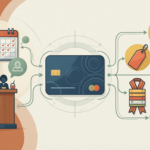
Consider how decisions often (typically?) get made in a large organisation: a (relatively) small group of people comes together, consults briefly, documents their discussion, and makes a recommendation. That gets handed over to a person with decision making authority, who then commits to the recommendation of the group. Note this last bit — the decision maker rarely (almost never, really) deviates from the group’s recommendation. Why? Risk. This process is designed to spread the risk of being responsible for a (potentially) bad decision. An important aspect of this process is that the people making up the recommending group often don’t know each other well (or at all, depending on the organisation). They are subject matter experts of one kind or another, and they’ve been brought together to make the recommendation, after which they’ll go their separate ways. In such situations, people relate to each other via a role based algorithm — they interact with you on the basis of your role in the group. In many cases, this amounts to relating to one another on the basis of job titles.
In this context, the only way we can ever get anything done is if we can rely on those role-based signals. If there’s an “architect” in a group of business people (who otherwise don’t know her), the business people must be able to rely on the role identifier as being sufficient to trust the input of that architect. If they can’t do that, the process breaks down (and, in fact, that’s not uncommon, in the real world). The authority of a such role-based mechanisms maps only loosely to the person actually fulfilling the role, typically. The decision making process described above relies on the authority of the role — the people holding them are largely irrelevant, interchangeable. Note that this has nothing to do with value, or results — those, of course, are brutally dependent on the people holding those roles. At the moment, though, we’re just ruminating about the aforementioned process. If the members of the recommending group lose faith in the person filling a role, then the process breaks down.
What does this have to do with my conversation? Well, it’s simple, really. Again, recall that I said we were having “a very frank, open, and honest conversation, where we’re being candid about ourselves and our own weaknesses”. By admitting to having weaknesses (any), we undermine our role-based authority. We open ourselves up to the risk that we will be ineffective in the future in situations where we are representing the role. In a world where market forces exert tremendous pressure to make decisions as quickly as possible, and where (other) organisational processes mean that we have limited opportunities to influence decisions and to do The Right Thing(tm), that, my friends, is a serious risk.
Serious enough that I took my hand off the mouse, and refrained from moving our conversation to the wiki.
Nevertheless. My opinion (that an organisation that can have such a conversation in an open and unfettered context is stronger than mine) remains unchanged. I am convinced that the potential value represented by making information freely available (consider the example of the architect-on-the-verge in Chennai again) far outweighs the risks, in the long term. My problem, right now, today, is the short term. Here’s the thing — in an organisation where this kind of information could be freely shared, the aforementioned decision making process also works differently — it has to. The “group” may be self selecting, authority is reputation- rather than role-based, maybe the decision maker ceases to exist and consensus in the group is the decision, etc. There are already lots of models for how that could work (FOSS, etc.), and social software helps them tremendously. But I don’t work for that kind of an organisation. And, frankly, I’ll be damned if I can see how to get from A to B. So, instead of putting our conversation into the wiki, I’ve written this post. I can see where we are (and where I’d rather not be), and I can see where I’d like us to go.
How does an organisation like mine “get over the hump”? Can it?